

Fire features in Washington
Fire features built to keep Washington County evenings going
Fire pits and propane features designed with your grade, drainage, and hardscape from the start.
Design a fire feature that belongs in your Washington County yard
Start a conversation about your Washington County backyard and what it takes to make it work after dark.
A fire feature bolted on later almost always shows
The most common mistake on a backyard fire feature project is treating it as something to add once the patio is already done. The problem is that fire features need to be positioned relative to grade, drainage flow, and the surrounding hardscape before any base material goes down. If water drains toward where the feature sits, you'll have a pooling problem by the second spring thaw. If the grade wasn't accounted for in the seating layout, the whole space feels awkward and nobody actually uses it. Washington County yards have enough variability in soil and slope that this kind of after-the-fact approach almost always results in either a retrofit or a compromised result. We plan the fire feature into the patio design from the first site visit, so the drainage, base depth, and seating orientation are all resolved before a single paver goes down.
What we actually build, and how it fits together
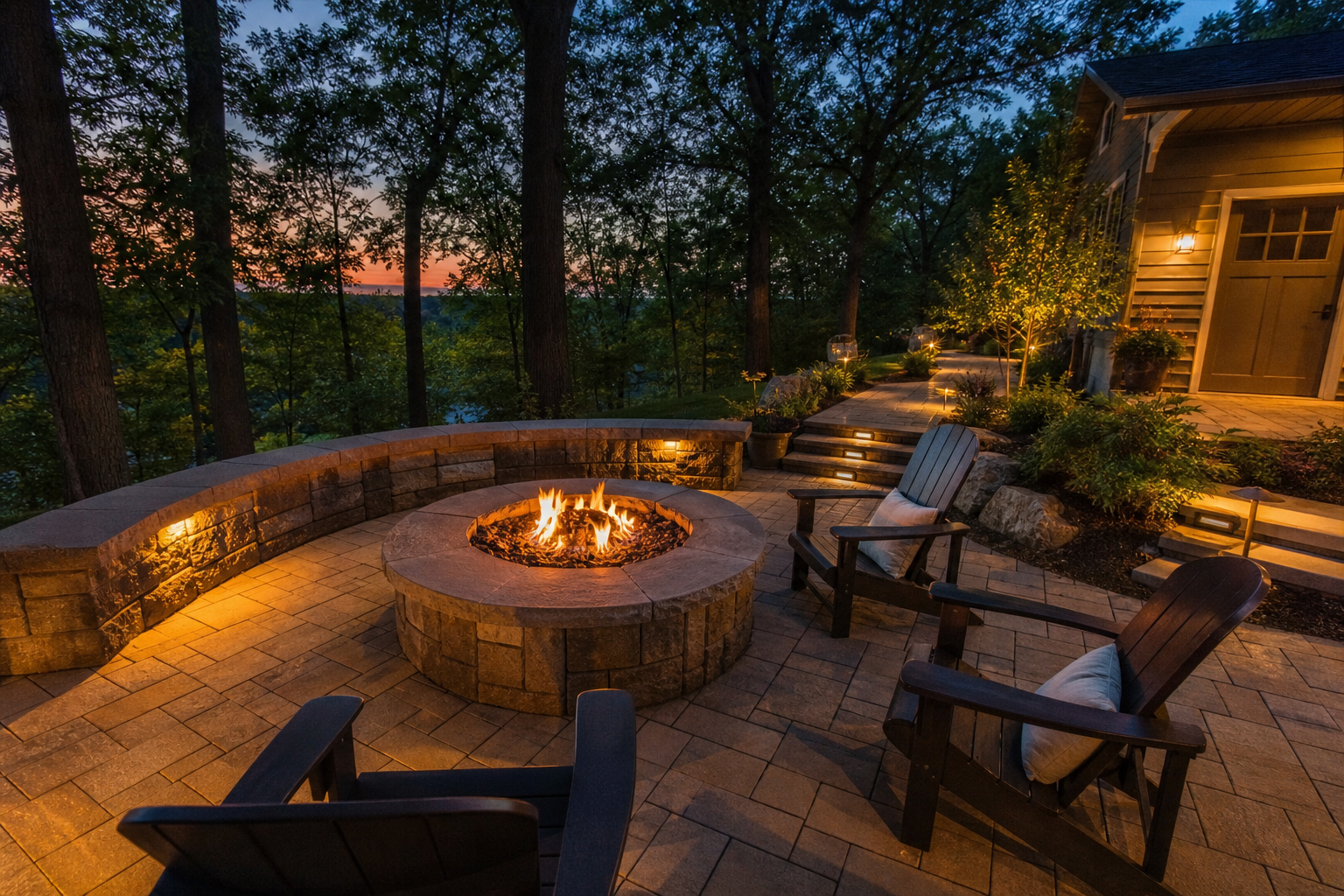
McGuire designs and installs both wood-burning fire pits and propane fire features, sized and positioned to match how the space will actually be used. The feature itself is one part of a coordinated system that typically includes the surrounding patio hardscape, seat walls, landscape lighting, and drainage. On lakefront properties in Washington County, that system also has to account for shoreland setback requirements and county zoning review before construction begins. We handle that coordination as part of the project. The materials we work with include concrete pavers and natural stone, and as a Belgard Authorized Contractor we have access to the full Belgard product line for clients who want specific paver profiles or finishes. An outdoor kitchen or privacy planting can fold into the same project if the site calls for it.
Built to survive what Wisconsin winters actually do
Freeze-thaw cycles in Washington County are not gentle. A fire feature installation that doesn't start with a properly graded and compacted base will shift, crack, or settle before the second winter is over. We build to the structural standards that Wisconsin's climate demands: correct base depth, appropriate drainage slope, and materials selected for thermal performance. On sloped sites, that often means coordinating the fire feature with a retaining wall to create a level, stable gathering area where the grade would otherwise make seating impossible. The goal is a space that looks the same in year five as it did the first evening you used it.
Washington County's mix of suburban lots, sloped terrain, and lakefront properties on bodies like Pike Lake and Friess Lake means fire feature projects here rarely follow a simple template. Soil variability, grade changes, and shoreland setback requirements from the county zoning office all shape how a project gets planned and built.
- Washington County lakefront properties on lakes like Pike Lake and Friess Lake commonly feature fire pits as primary outdoor amenities.
- Shoreland setback rules in Wisconsin require structures to be set back at least 75 feet from the ordinary high water mark, with permit review required for patios and fire features near the shoreline.
- Wisconsin's freeze-thaw cycles demand properly graded and compacted hardscape bases to prevent frost heave and settling.
How a fire feature project works
- 1
Site visit and grade assessment
We start by walking the property with you. We look at the existing grade, where water moves during a heavy rain, how the space connects to the house, and what the soil conditions suggest about base requirements. On lakefront sites, we also identify any setback or permit considerations that need to be resolved before design begins. This visit is what makes the rest of the project go cleanly.
- 2
Design the coordinated system
The fire feature design happens alongside the patio layout, drainage plan, and lighting plan, not after them. We determine the feature type (wood-burning or propane), size, placement, seating configuration, and how it connects visually and structurally to the surrounding hardscape. If a retaining wall is needed to create a level gathering area on a sloped site, that gets resolved here too. You see the full picture before anything is built.
- 3
Material selection
We walk you through the paver, stone, and fire feature options that fit the design and your site conditions. As a Belgard Authorized Contractor, we can specify from the full Belgard range for patio and seat wall elements. For the fire feature itself, we'll discuss the trade-offs between wood-burning and propane based on your lot, your preferences, and any applicable local requirements.
- 4
Build and final walkthrough
Construction follows the coordinated plan: base prep, drainage, hardscape, fire feature installation, lighting, and any plantings all sequenced to avoid rework. When the project is complete, we walk through the finished space with you, covering how the drainage system functions, how to operate the fire feature, and what seasonal maintenance looks like in a Wisconsin climate. The result is a backyard that works the first evening and keeps working.
Benefits
Evenings that run into fall
A well-positioned fire feature extends comfortable outdoor use well past sunset and deep into the shoulder seasons. Washington County lakefront listings actively market fire pits as a reason to be outside after dark, and a properly integrated fire feature is what makes that a reality rather than a nice idea.
No retrofit headaches later
Because the fire feature is designed into the hardscape system from the start, there's no cutting into finished pavers, re-routing drainage, or rebuilding seat walls to accommodate it. Planning the fire feature alongside the patio and drainage from day one eliminates the most common sources of extra cost and disappointment.
Engineered for Wisconsin freeze-thaw
Every installation starts with a properly graded and compacted base built to resist the frost heave and settling that Wisconsin winters produce. The base system is what separates a fire feature that holds its shape in year five from one that shifts after the first hard winter.
Belgard Authorized Contractor quality
McGuire holds a Belgard Authorized Contractor designation, which means the paver and hardscape materials surrounding your fire feature meet a verified standard for product quality and installation practice. That credential matters when you're building something meant to last.
Fire features questions from Washington County homeowners
Make your Washington County backyard worth staying in after dark
If your backyard has been sitting unused after dark, a fire feature planned into the right hardscape system can change that. Reach out to talk through your site, your grade, and what a coordinated outdoor living space would look like for your Washington County property.
Talk about your project