

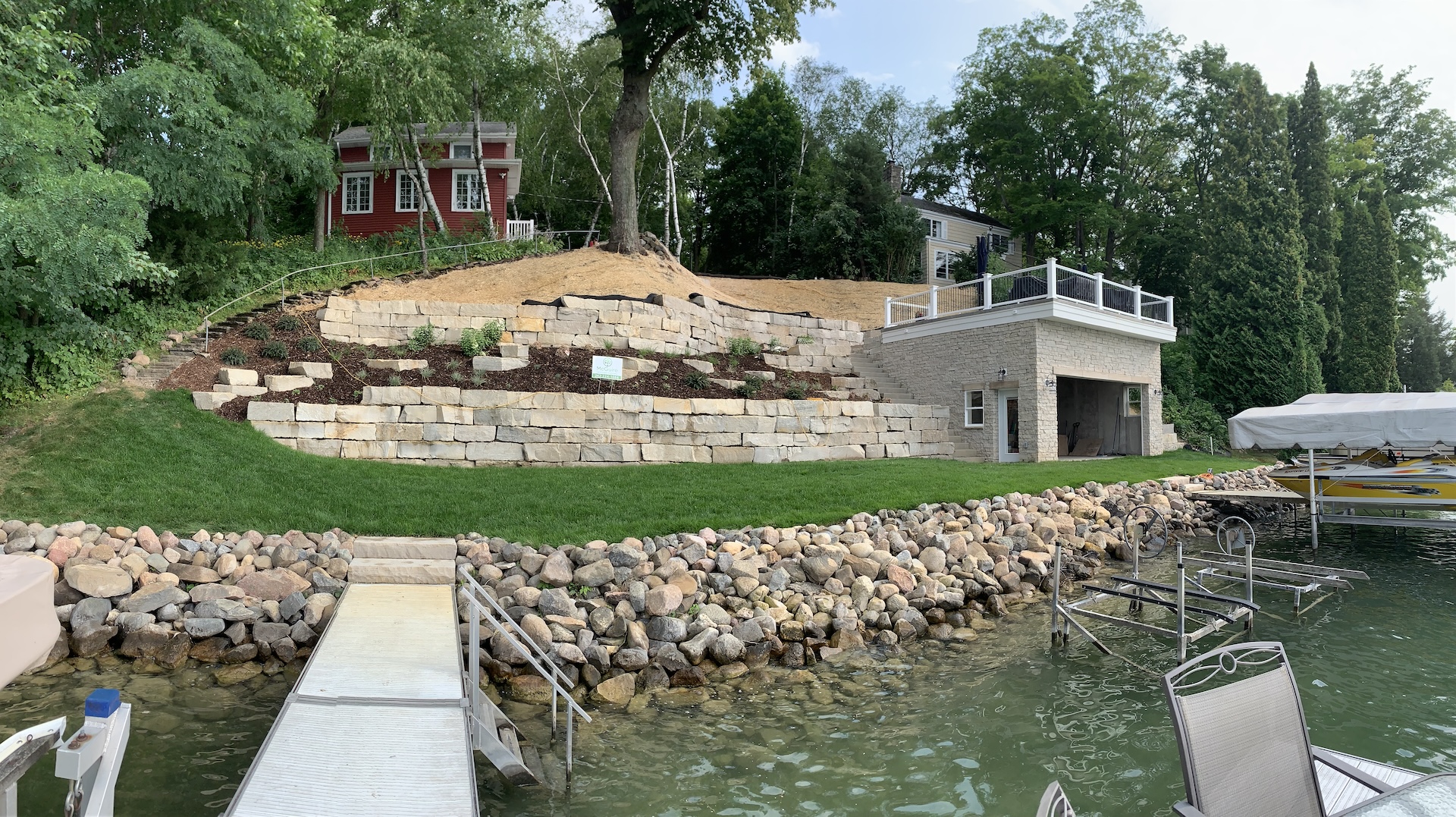
Life at the Water's Edge
Safe access to the lake. A shoreline that holds. Steps that work for every generation.
We build the infrastructure that makes lakefront living effortless.
A lakefront property is a different kind of investment. What takes real planning is the shoreline itself — the access, the structural systems, and how it all holds up over time.
Knowing what can be built within the 75-foot shoreland setback in Wisconsin shapes every design decision from the start.
McGuire Landscape Company approaches Lakeside Living as a complete system — shoreline protection, safe access, boathouse integration, and long-term structural solutions that work within Wisconsin shoreland regulations.
Build Your Lakeside Living Environment
A well-planned lakefront property requires coordinated systems. Each service area below addresses a critical layer of shoreline performance.
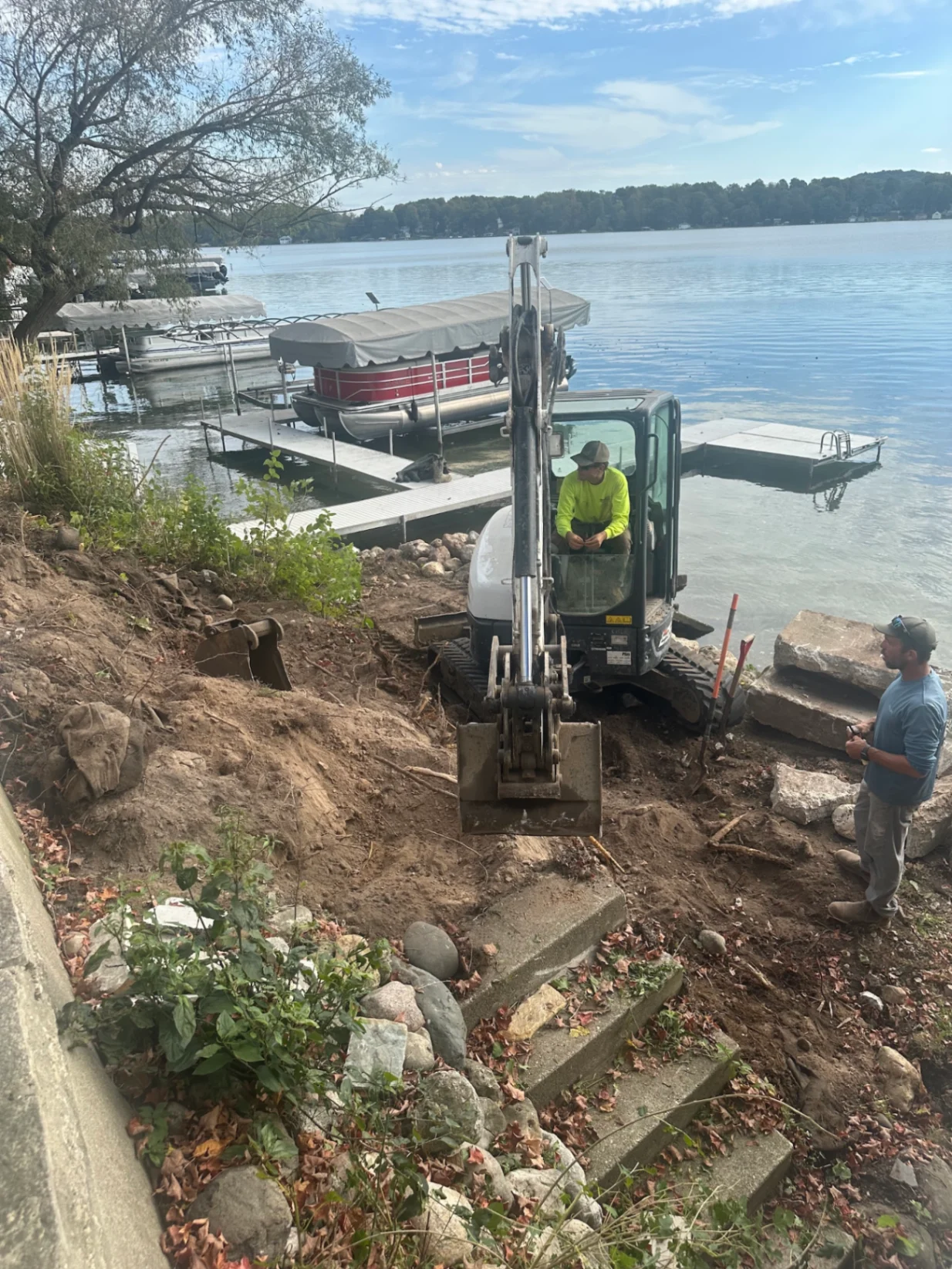
Shoreline Protection and Stabilization
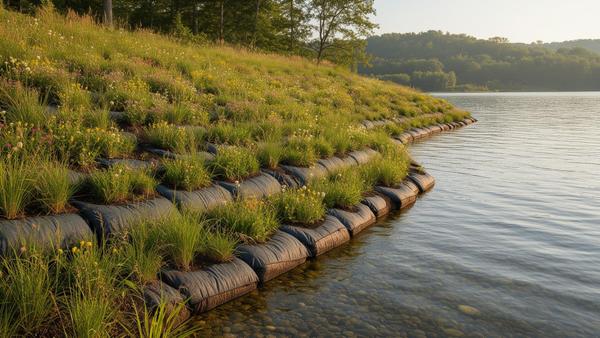
Shoreline frontage changes quietly. After ice-out, the bank sits a little differently than it did the previous spring. Wave action, fluctuating water levels, and unstable soils work gradually, and the change is easy to ignore until it is not. Many homeowners compare living shoreline systems and retaining walls before selecting an approach. Effective shoreline stabilization begins below grade.
We evaluate:
- Slope grade
- Soil composition and load-bearing capacity
- Drainage patterns
- Existing structural conditions
- Long-term water movement
- Wave exposure
Stabilization solutions may include:
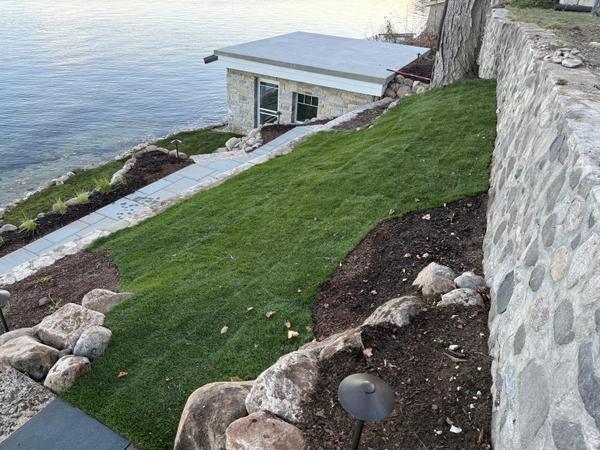
- Natural stone retaining systems
- Engineered wall systems
- Boulder reinforcement
- Living shoreline integration
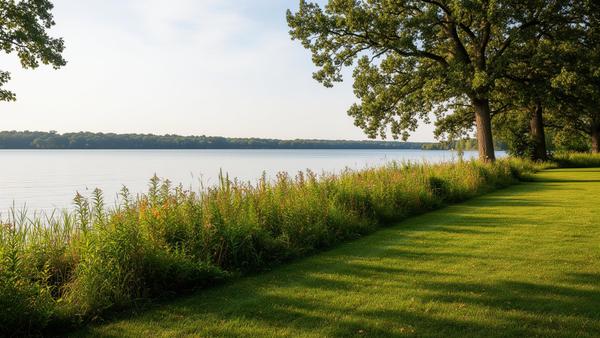
- Native planting buffers
Base preparation and backfill drainage determine how the system holds up season after season, not just how it looks when the work is done.
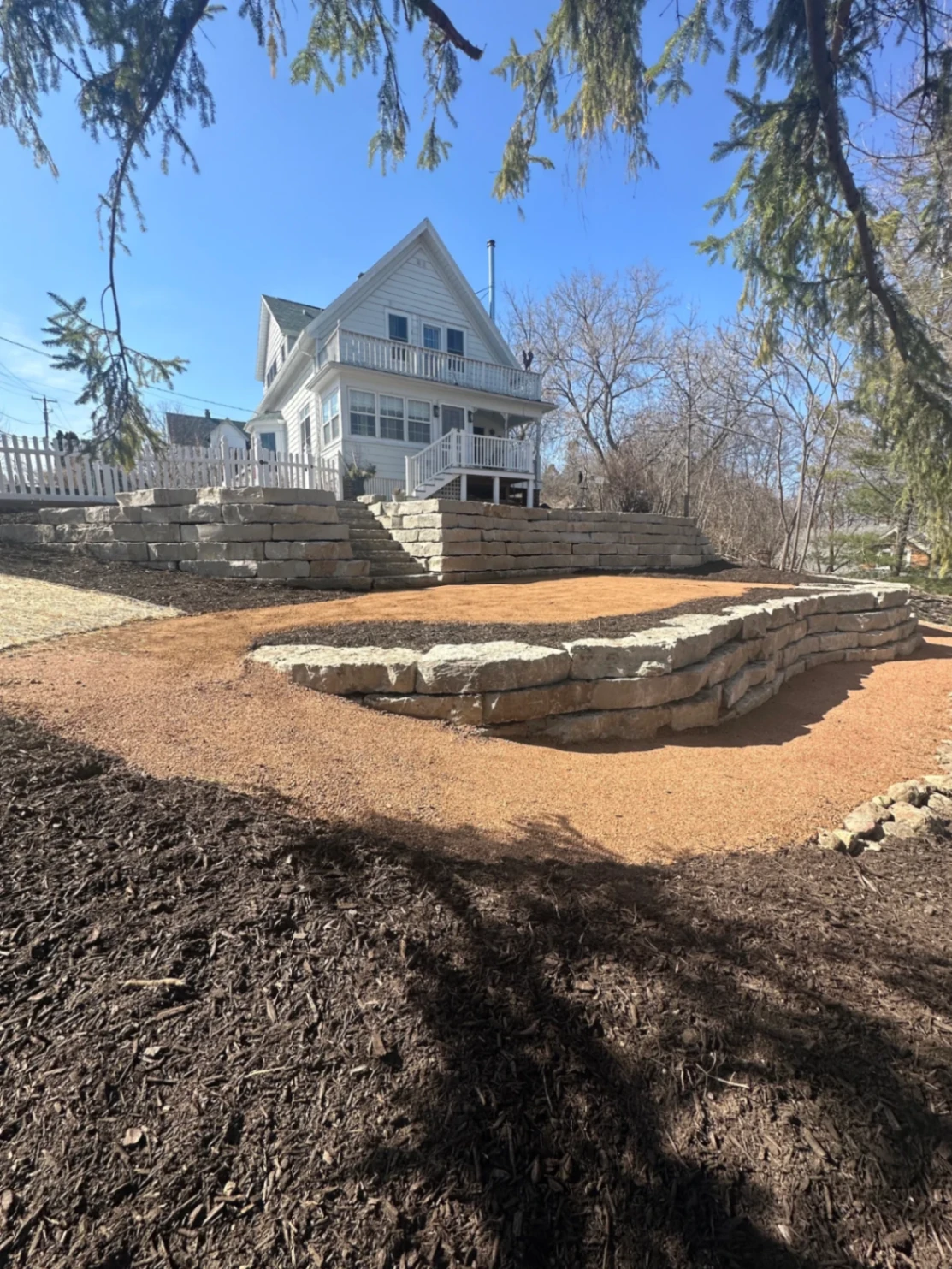
Retaining Walls and Structural Systems
Shoreline retaining systems operate under conditions that standard landscape walls never face. Hydrostatic pressure, soil movement, freeze-thaw cycles, and water fluctuation are constants on a lakefront property, not occasional variables. Designing for them from the start is what separates a wall that holds from one that shifts.
They must account for:
- Hydrostatic pressure
- Soil movement
- Freeze-thaw cycles
- Water fluctuation
We install retaining systems with appropriate footing depth, reinforced base layers, and integrated drainage to prevent long-term displacement. A wall built correctly for these conditions is one you stop thinking about. The view stays the view.
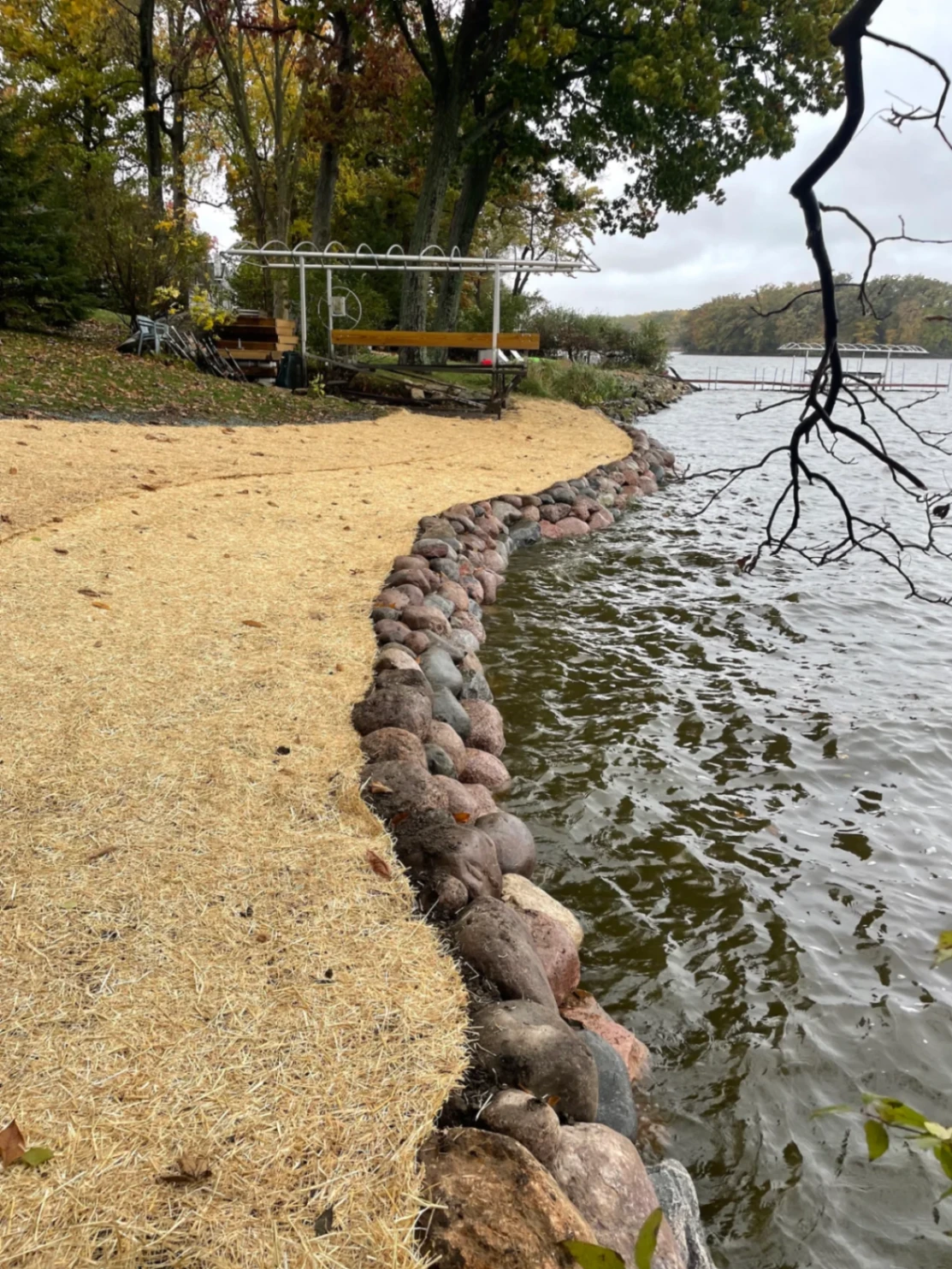
Stairs and Walkways
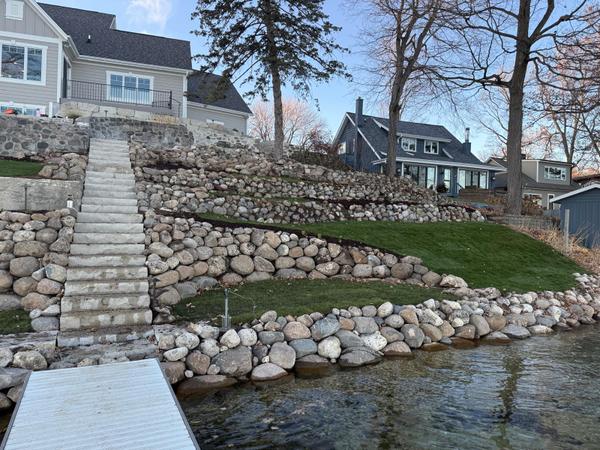
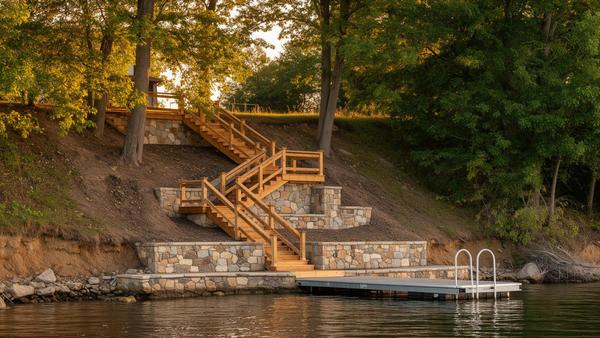
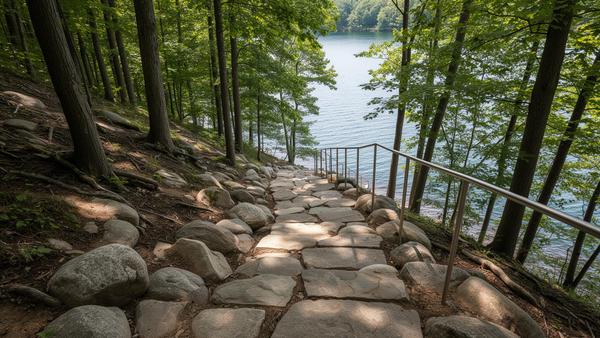
Getting to the water should feel easy. On a steep bank, that ease comes from precise installation. Lake access must account for proper footing depth, drainage, seasonal water variation, and safe tread dimensions. On properties with tighter frontage, understanding how to design a 50-foot lakefront lot before finalizing access routes can shape every decision that follows.
Safe lake access requires:
- Footing embedment below frost line
- Consistent rise and run
- Seasonal water level changes
- Prevention of long-term settling
Stair systems are engineered to remain stable through seasonal water fluctuation and freeze-thaw cycles while staying positioned within approved shoreline limits.
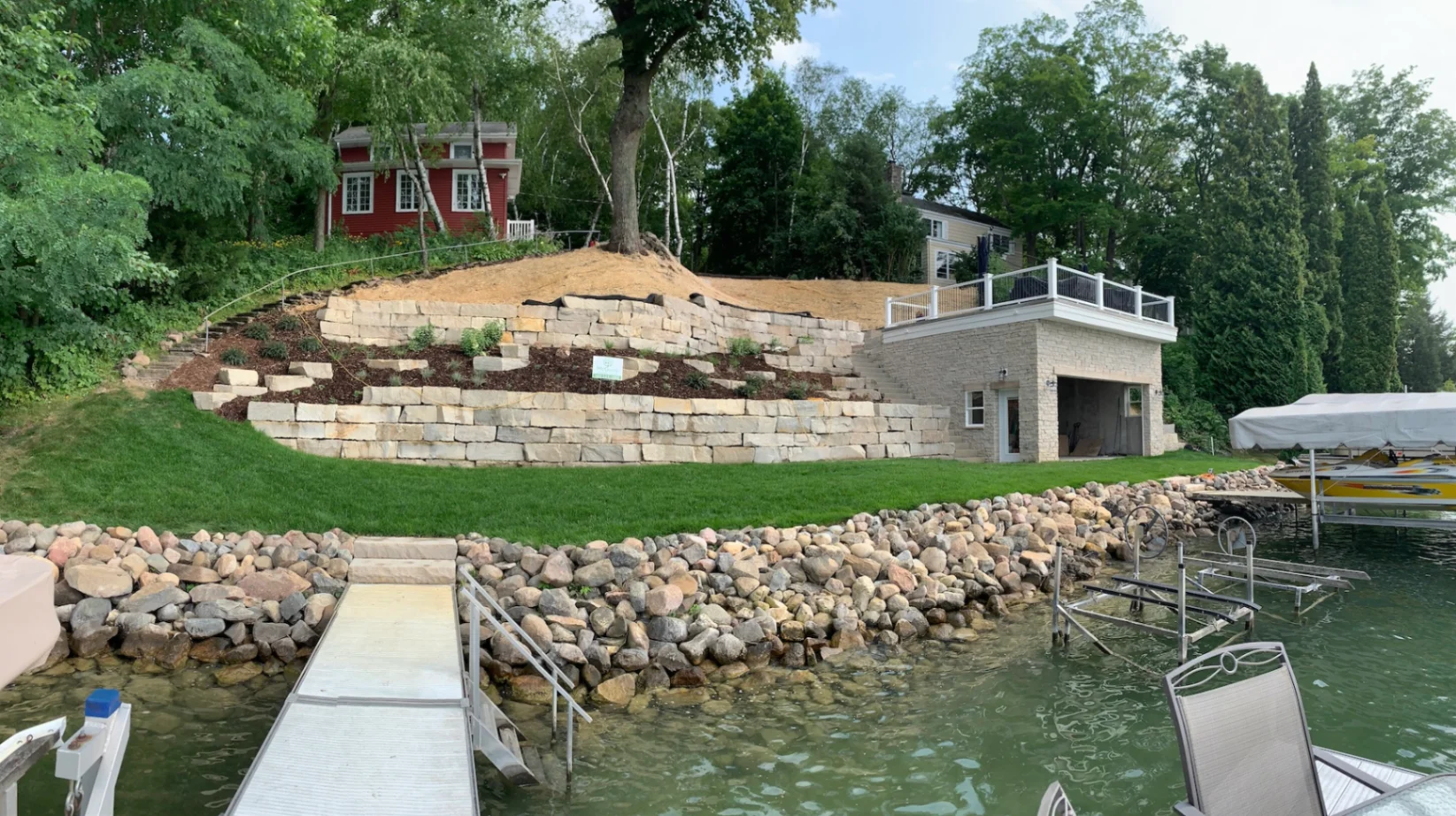
Boathouse and Pier Planning
The right boathouse is one that is ready to entertain. A space that pulls people down from the house and keeps them there. How the boathouse and pier sit on the property determines whether that is possible, and getting placement right means reviewing key considerations for boathouse planning in Wisconsin before finalizing structural placement.
Key considerations include:
- Frontage width and placement
- Traffic flow from home to water
- Storage for boats and recreational equipment
- Safety for children and guests
- Drainage around structural foundations
Learn how we coordinate boathouse and pier construction logistics alongside shoreline stabilization.
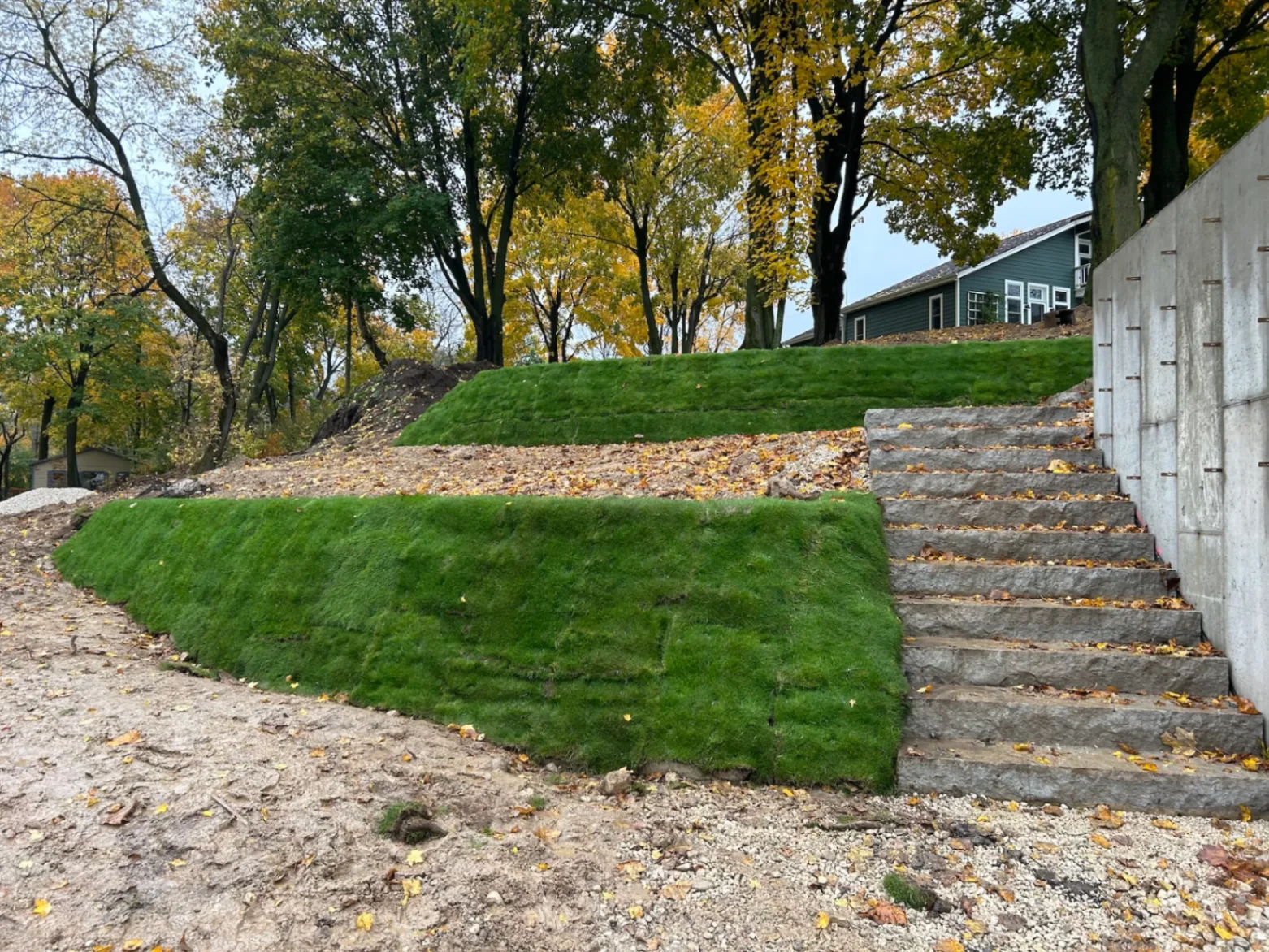
Difficult Access Construction
Not every lakefront site allows standard equipment access. Restricted lots, steep terrain, and limited staging areas demand careful coordination to protect surrounding structures and minimize site disturbance.
We coordinate:
- Barge-based material transport
- Controlled staging
- Minimal disturbance excavation
- Sequenced installation for restricted lots
Careful logistics reduce site disturbance and protect surrounding structures.
When a project includes a boathouse or pier, staging and sequencing must align with foundation elevations, shoreline stabilization, and access routes.
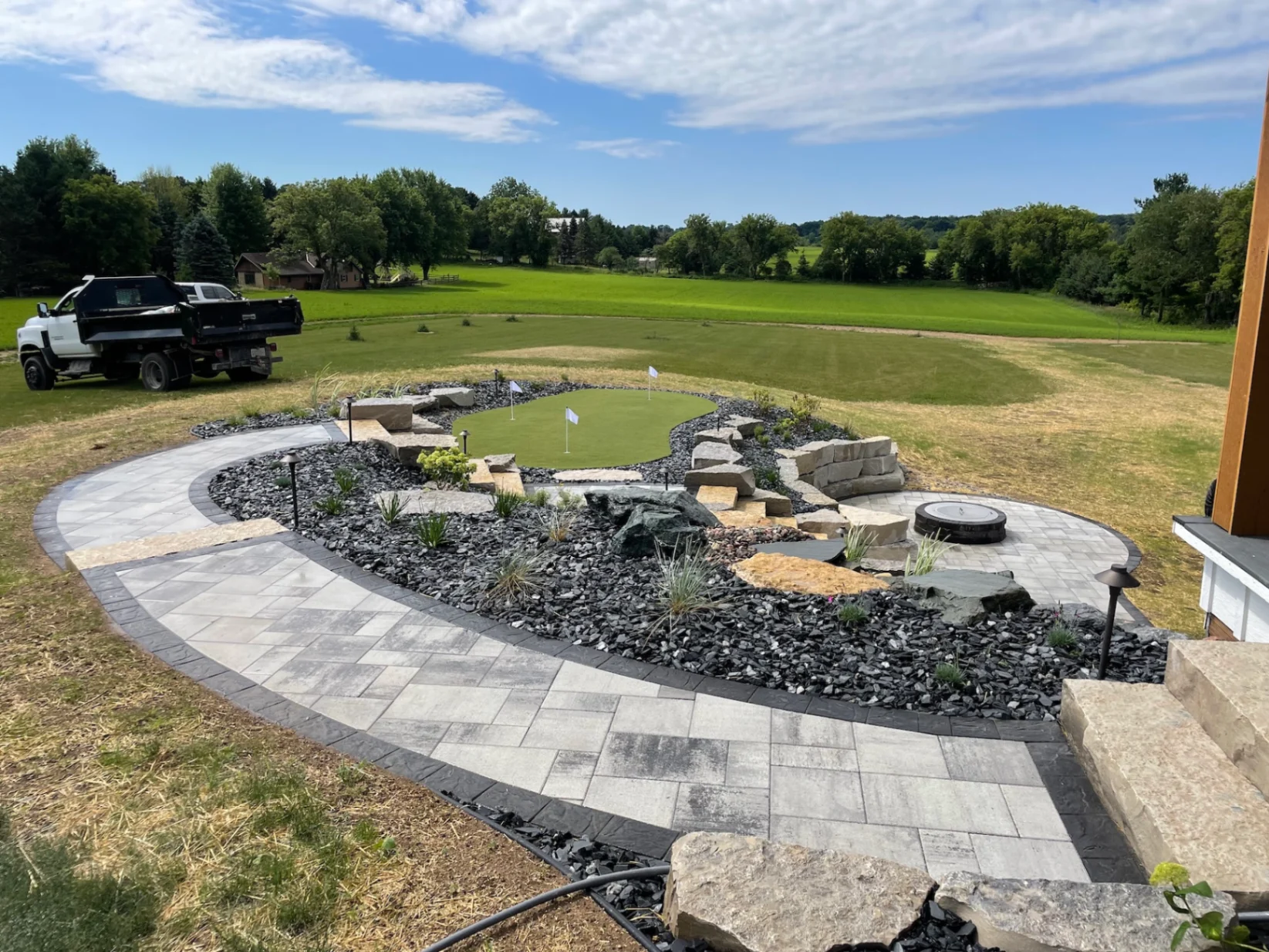
Drainage Solutions
Water management on a lakefront property does not stop at the shoreline edge. Runoff from upper elevations can accelerate erosion below, and retaining systems require proper drainage behind them. When one system is installed without accounting for the others, water pressure builds and accelerates failure.
Our drainage solutions and grading approach integrates surface runoff control, subsurface drainage, and shoreline stabilization into one coordinated plan.
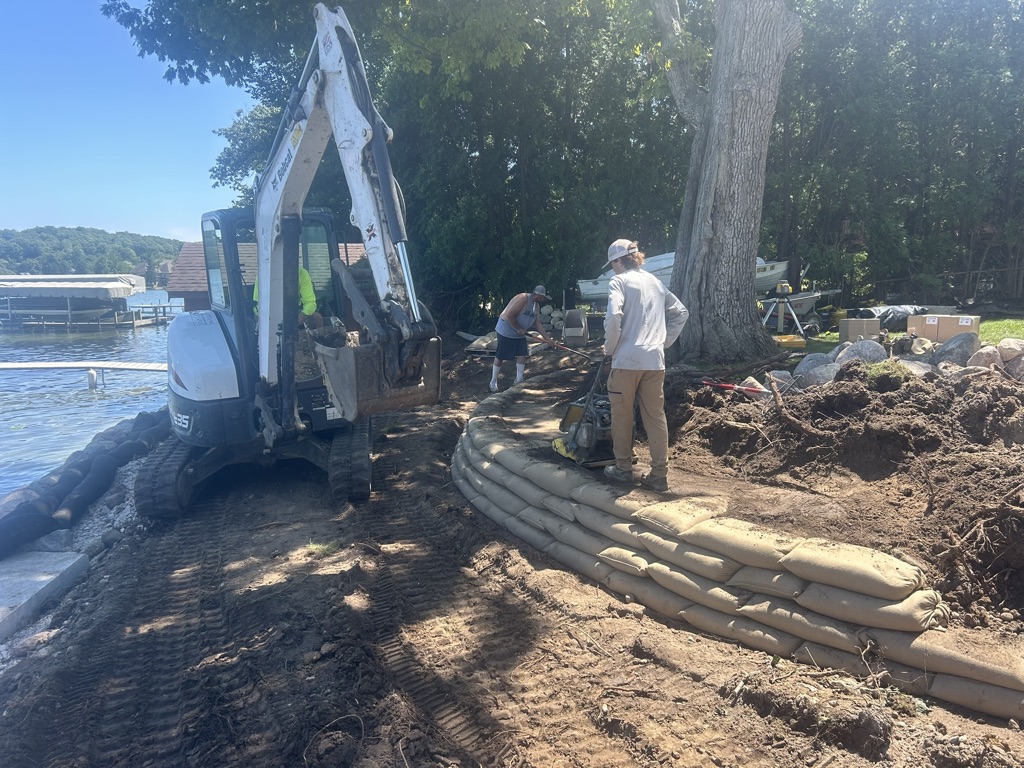
Phased Lakefront Projects
Many Lake Country homeowners build their lakefront environment over several seasons. Stabilizing the shoreline first, installing access systems second, and adding gathering areas later is a practical sequence that protects each phase of investment. A coordinated master plan protects earlier work and ensures each phase remains structurally sound and compliant. Once permits are approved, construction must align precisely with submitted plans and regulatory conditions.
Each phase should preserve:
- Required setback distances
- Approved shoreline access paths
- Existing vegetation where required
- Structural integrity of prior systems
- Retaining systems within designated limits
Accurate layout and disciplined execution ensure each phase remains compliant and structurally sound. All layout measurements are verified in the field prior to excavation.
Shoreline Regulations & Permit Planning
Understanding the regulatory landscape early is essential to every successful lakefront project.
Most Wisconsin lakefront properties fall under state and municipal shoreland zoning rules.
In many cases, this includes:
- A 75-foot setback area from the water's edge
- Limitations on adding new hardscape within that setback
- Oversight within 1,000 feet of the shoreline
- Review of grading, retaining systems, and structural changes
In general, new patios or hardscape surfaces cannot be added within the 75-foot setback unless a compliant surface already exists. Homeowners are typically allowed one access path up to five feet wide connecting the home to the water.
If you are unsure how these rules apply to your project, reviewing how shoreline permits work in Wisconsin and why projects get delayed can clarify what to expect during approval.
Because regulations vary by municipality and lake district, early coordination is essential.
Permit Coordination — GP26 & EO 178-39
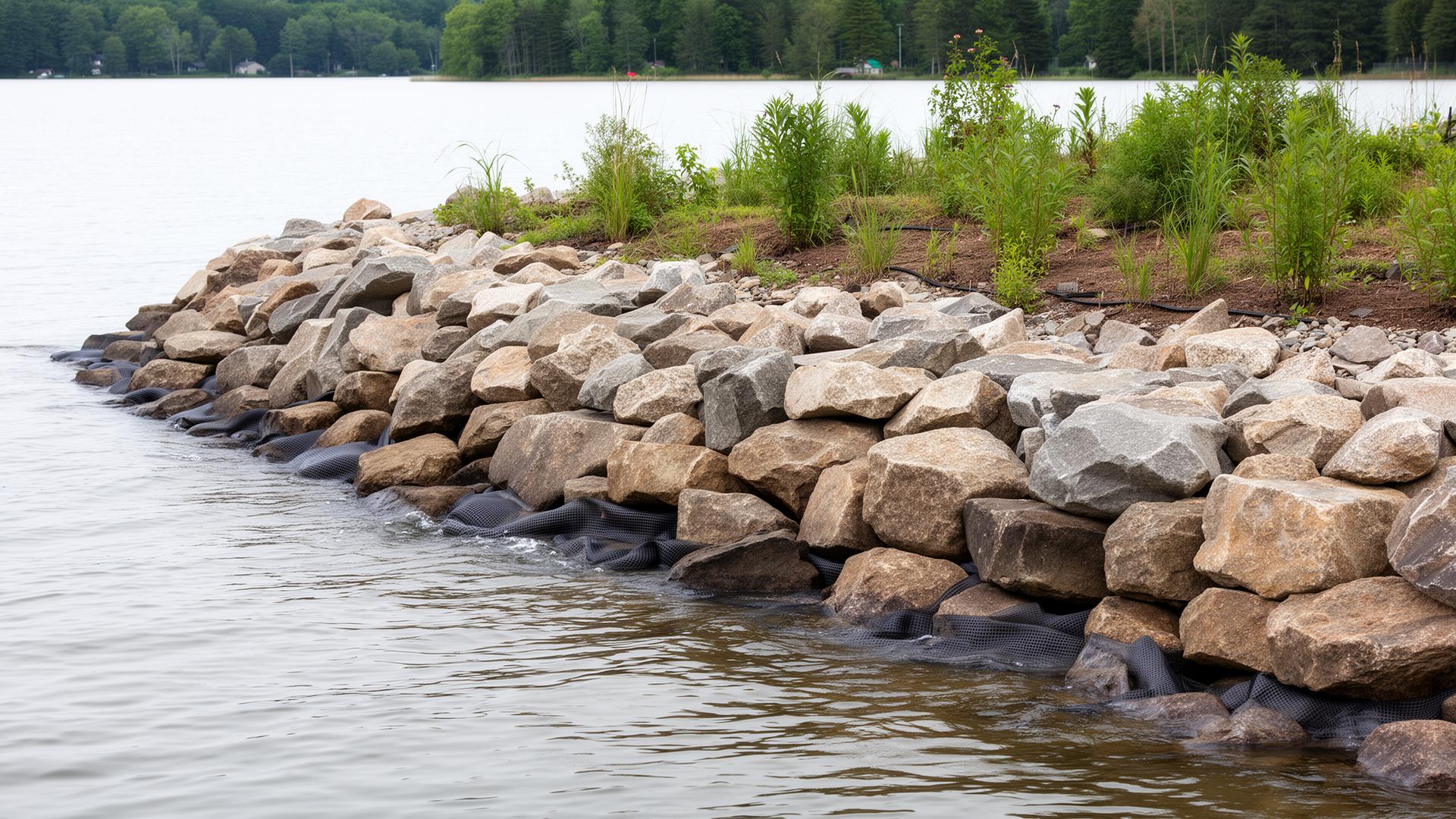
Most lakefront work in southeastern Wisconsin touches two regulatory layers: Wisconsin DNR General Permit 26 (GP26) for lakeshore erosion control below the ordinary high-water mark, and Waukesha County EO 178-39 (or the equivalent county shoreland ordinance) on land. We coordinate both in parallel so design, mitigation, and stone placement clear review together.
GP26 lakeshore erosion control covers:
- 12–30 inch angular fieldstone (riprap) sizing
- Toe stone placed at or below ordinary high-water mark
- Geotextile filter fabric behind stone
- Slope and elevation conforming to general permit limits
- Native plant restoration above the stone line
Larger or more complex projects fall under an individual Chapter 30 permit. See our GP26 riprap checklist and the Waukesha County shoreland ordinance guide for the homeowner-level walkthrough.
How We Approach Projects
A Structured Process from Planning to Completion
Site Evaluation
We review property conditions, regulatory constraints, and intended use.
Design & Scope Alignment
Layouts and sequencing are developed with clear investment guidance.
Permit Coordination
Where required, documentation and approvals are managed proactively.
Construction Execution
Work is completed with disciplined structural preparation and careful grading.
Final Walkthrough
We confirm structural performance and long-term usability.
Related Articles
Planning guides and insights for lakefront property owners in southeastern Wisconsin.
Frequently Asked Questions
Start with a Lakefront Site Review
Lakefront projects involve more variables than most. Schedule a site consultation and we will walk the property with you, review site conditions and address any regulatory constraints.
We respond within 1 business day.