
Designing a 50-Foot Lakefront Lot Without Wasting Space
Working with 50 feet of lake frontage can feel restrictive at first glance. On paper, it may not seem dramatically different from a wider lot. In practice, that limited shoreline width influences every layout decision.
Careful frontage planning is central to comprehensive Lakeside Living planning, especially when width is limited.
When planning a 50-foot lakefront lot in Wisconsin, frontage width must be considered alongside the 75-foot setback requirements that regulate construction near the shoreline. and local shoreland regulations. The goal is not to fit as much as possible near the water. The goal is to preserve usable shoreline space over time.
Why Frontage Width Changes Everything
With only 50 feet of lake frontage, shoreline elements begin competing for space.
Boathouse placement, stabilization systems, pier alignment, and lake access all occupy physical shoreline width. When positioned without coordination, they compress circulation space and reduce flexibility.
On narrow lakefront property, small positioning changes can significantly affect how the shoreline feels and functions.
The difference between a usable shoreline and a crowded one often comes down to inches, not feet.
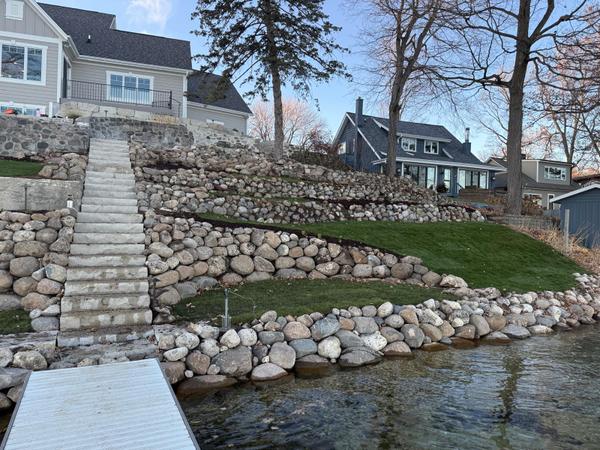
Stabilization Must Protect Walk Space
Shoreline stabilization is usually one of the first priorities. However, installing a retaining wall too close to the property line can reduce the ability to move safely along the shoreline.
Living shoreline approaches may require horizontal transition space. Retaining walls may create a defined edge but must still allow enough clearance for safe walking.
If stabilization eliminates walk space, future access and maintenance become more difficult.
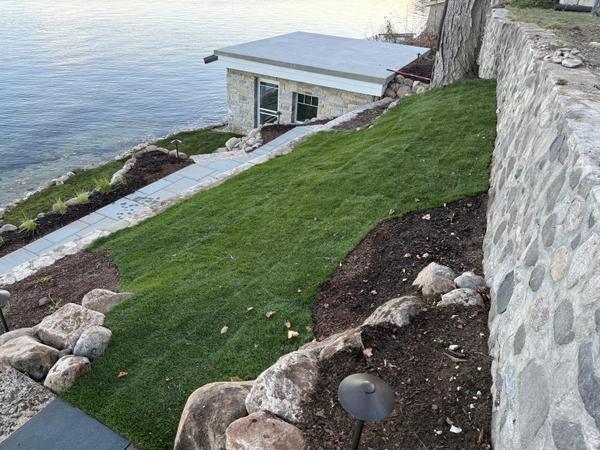
Boathouse Placement on 50 Feet
Boathouse placement requires careful alignment with both side property lines and neighboring piers.
On a narrow lakefront lot in Wisconsin, improper positioning can create congestion at the shoreline edge. Once a structure is installed, flexibility decreases.
Before finalizing placement, it helps to evaluate:
Side setback requirements
Pier alignment with neighbors
Safe approach routes from the home
Available shoreline walk space
Planning these elements together prevents conflicts later.
Coordinating Lake Access
Lake access should feel intentional, not squeezed into leftover space.
On 50 feet of lake frontage, stair alignment and shoreline entry points must support natural traffic flow. A poorly positioned access path can divide the shoreline into awkward segments.
On narrow frontage, protecting movement patterns is just as important as protecting soil.
When lake access, stabilization, and boathouse placement are coordinated from the beginning, the shoreline functions as a unified layout.
What Is Realistic?
A 50-foot lakefront lot can absolutely support responsible shoreline stabilization, safe access, and properly positioned pier alignment. It simply requires disciplined sequencing.
It may not be realistic to maximize hardscape near the water or crowd multiple features into the same shoreline band.
The most successful narrow frontage designs prioritize:
Stable shoreline structure
Safe and clear access
Coordinated placement of permanent structures
Everything else should support those priorities.
Planning Makes the Difference
Designing a 50-foot lakefront lot without wasting space begins with mapping boundaries clearly. Confirm setback limits. Understand shoreline stabilization requirements. Align permanent structures first, then shape access and circulation around them.
Frontage width cannot be changed. Layout discipline can.
When planned carefully, even limited shoreline can remain functional, stable, and adaptable over time.
Planning shoreline or lake access work? See how we approach Lakeside Living