
Living Shoreline vs Retaining Wall: What Works Best on a Wisconsin Lake?
When erosion becomes visible along the water’s edge, most homeowners begin comparing a living shoreline vs retaining wall solution. Both approaches are used for shoreline stabilization in Wisconsin, but they function differently and are reviewed differently under Wisconsin shoreland zoning.
Shoreline stabilization is one part of a broader Lakeside Living strategy that balances regulatory constraints, frontage width, and long-term shoreline performance.
The right choice depends on slope, soil conditions, frontage width, and long-term use goals. Before committing to either option, it helps to understand how each system actually performs on a lakefront property.
What Is a Living Shoreline?
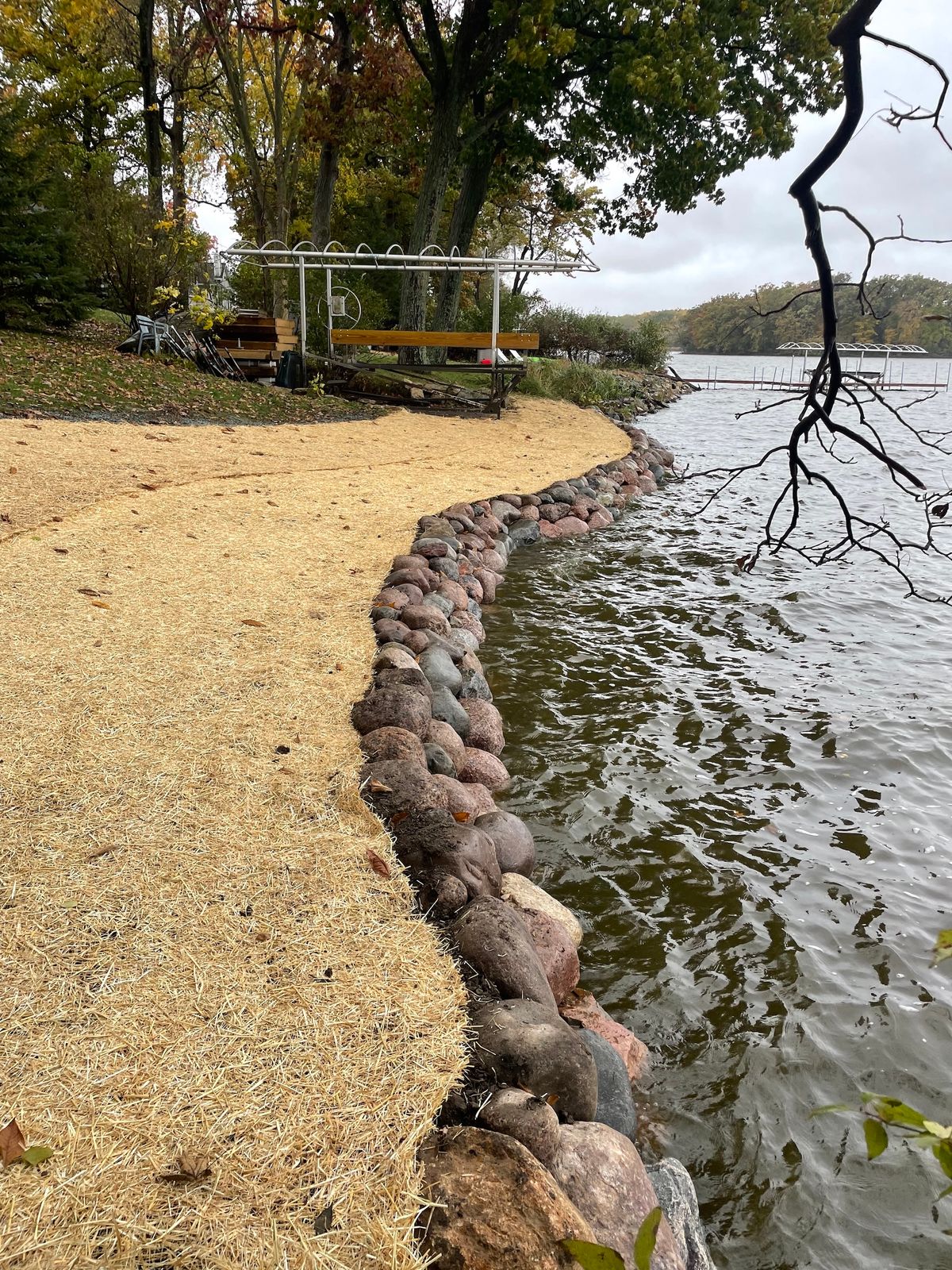
A living shoreline relies on vegetation and natural grading to stabilize the bank. Native plantings, controlled slopes, and sometimes boulder reinforcement work together to reduce wave impact and strengthen soil over time.
Instead of creating a hard vertical edge, this approach allows the shoreline to transition gradually.
A living shoreline may be appropriate when:
The slope is moderate rather than steep
Erosion is gradual
There is enough horizontal space for plant establishment
The goal is to maintain a natural shoreline appearance
Vegetation must establish properly before full performance is achieved. Drainage above the slope also needs to be controlled so runoff does not undermine the system.
What Is a Retaining Wall?
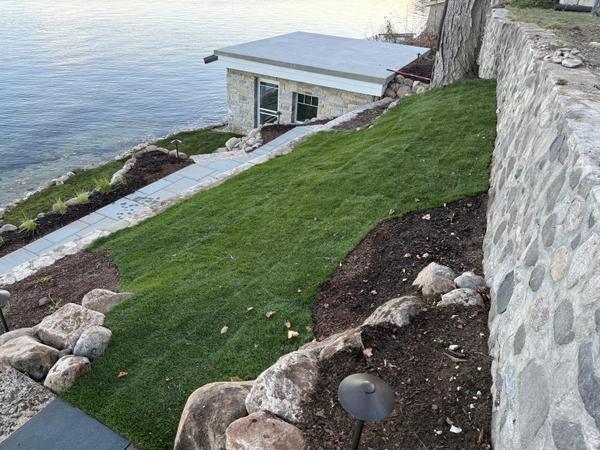
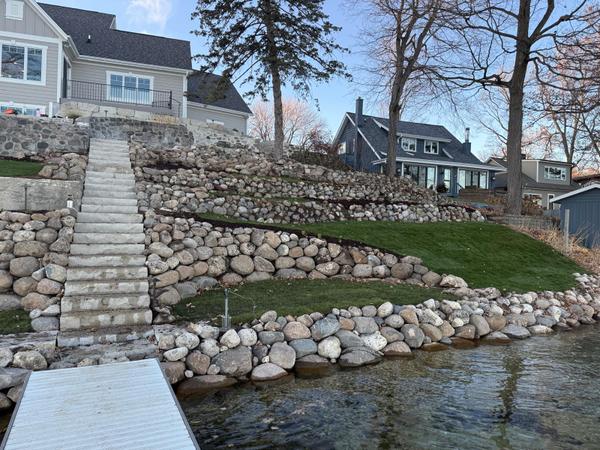
A retaining wall stabilizes the shoreline using structural reinforcement. On lakefront property, this often involves natural stone, large boulders, or engineered block systems designed to resist soil pressure and wave exposure.
Retaining walls are typically considered when:
Slopes are steep
Active erosion is already present
Usable flat space behind the shoreline is limited
Soil movement requires structural containment
Drainage behind the wall is critical. Without proper base preparation and backfill drainage, pressure can build and compromise long-term stability.
A retaining wall creates a defined shoreline edge. It does not rely on plant establishment for structural integrity.
How Wisconsin Shoreland Zoning Affects the Decision
Shoreline stabilization projects are reviewed carefully under Wisconsin shoreland zoning regulations. Both living shorelines and retaining walls may require a shoreline permit depending on scope and location. Placement inside the 75-foot setback boundary often determines the level of review required.
Living shoreline systems are sometimes viewed favorably when they maintain a natural shoreline buffer. Retaining walls may require clearer justification if they introduce additional hard surface close to the water.
Regulators focus less on aesthetics and more on whether the chosen system properly addresses site conditions.
Documentation, drainage planning, and setback positioning matter more than preference alone.
Performance Over Time
A living shoreline and a retaining wall perform differently as seasons pass.
A living shoreline depends on:
Healthy root systems
Proper plant density
Controlled runoff
Stable slope transitions
A retaining wall depends on:
Adequate footing depth
Proper compaction
Integrated drainage relief
Structural alignment
Neither solution is maintenance-free. They simply respond differently to weather, freeze-thaw cycles, and water movement.
Space and Usability Considerations
On narrower lakefront lots, especially when designing a 50-foot lakefront lot, the choice between a structural wall and a graded living shoreline affects usable walk space significantly. Retaining walls can maximize flat space behind the wall. Living shorelines typically require more horizontal room because of gradual slope transitions.
If frontage width is tight, that difference becomes important.
Traffic flow along the shoreline, alignment with lake access stairs, and coordination with boathouse placement all factor into the decision.
Which Option Is Right?
There is no universal answer.
Some properties benefit from a hybrid solution, combining structural reinforcement in critical sections with vegetation-based stabilization elsewhere.
The correct approach depends on soil composition, slope angle, wave exposure, and regulatory constraints.
When chosen carefully, either system can support long-term erosion control on a lake property.
The key is matching the solution to the site rather than selecting based on appearance alone.
Planning shoreline or lake access work? See how we approach Lakeside Living