
Boathouse Planning in Wisconsin: 7 Decisions That Matter Most
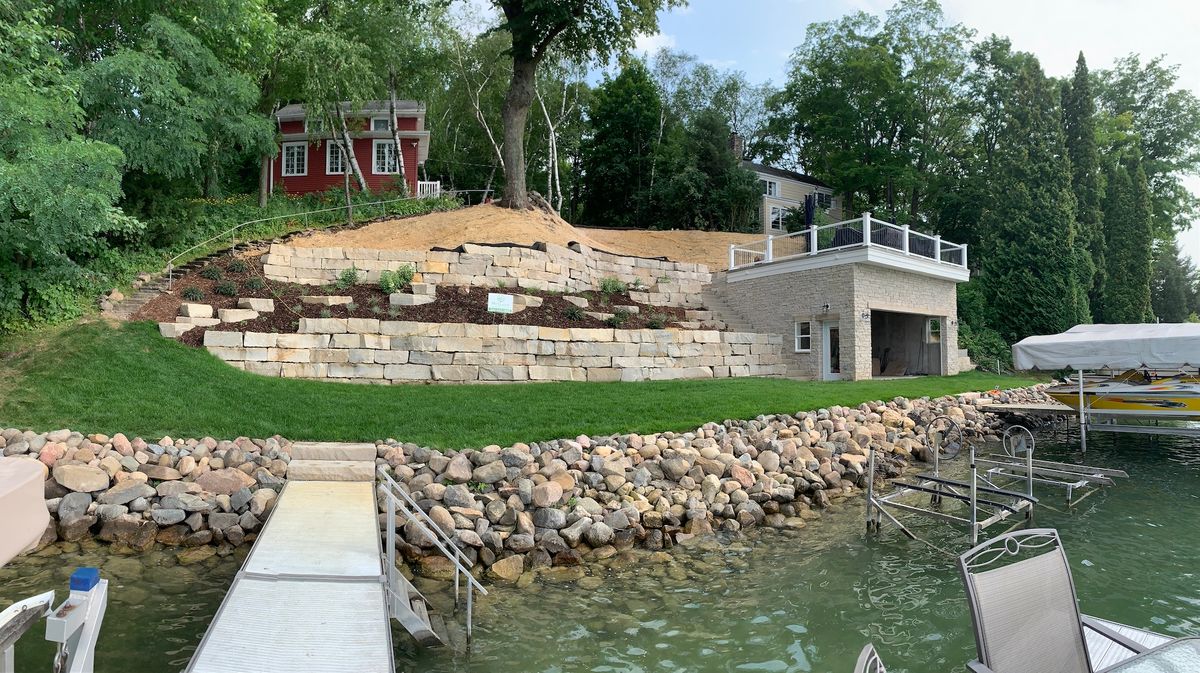
Boathouse planning in Wisconsin involves more than selecting a structure at the water’s edge. A boathouse influences shoreline layout, lake access, stabilization systems, and long-term property function. Once it is installed, flexibility decreases significantly.
Boathouse placement should align with an overall Lakeside Living layout that considers stabilization, access, and shoreline regulations together.
Because of shoreland zoning regulations and frontage constraints, placement decisions must be made carefully. Before finalizing drawings or coordinating with a builder, it helps to evaluate several foundational factors.
1. Confirm Shoreland Setbacks First
Before discussing design details, confirm shoreline setback boundaries and understand how the 75-foot setback affects structural placement and local zoning requirements. Boathouse placement must align with approved distances from property lines and the ordinary high-water mark.
Assumptions at this stage often create revisions later.
2. Evaluate Frontage Width and Walk Space
Frontage width determines how comfortably a boathouse fits along the shoreline. On narrower lots, improper positioning can eliminate usable walk space.
Adequate clearance along the water’s edge supports:
Safe movement
Future maintenance access
Flexible shoreline use
If walk space disappears, shoreline usability declines.
3. Coordinate With Shoreline Stabilization
Boathouse placement and shoreline stabilization must work together. Installing a retaining wall without considering boathouse alignment can compress circulation space or interfere with foundation placement.
Stabilization and structural elements should be positioned as part of the same plan, not separate phases.
The shoreline should function as one coordinated system, not a collection of independent installations.
That coordination protects both stability and usability.
4. Align Pier Placement Early
Pier alignment affects boat traffic flow, neighboring properties, and shoreline balance. Adjusting pier position after boathouse construction can be complicated.
Early evaluation of turning radius, dock configuration, and access pathways reduces downstream issues.
5. Plan Lake Access Intentionally
Lake access design often shifts once a boathouse is introduced. Stairs, pathways, and circulation routes should align naturally with entry points.
When access is treated as an afterthought, congestion develops along the shoreline edge.
Clear movement between the home, boathouse, and pier is essential.
6. Review Drainage Around the Structure
Water management near a boathouse foundation is critical. Runoff should not flow directly toward structural elements or undermine shoreline stabilization systems.
Proper grading and drainage integration protect long-term performance.
This step is frequently overlooked until after construction.
7. Understand the Permit Process
Boathouse projects typically require review under Wisconsin shoreland zoning rules. Depending on location, approvals often follow the shoreline permit process used across Wisconsin municipalities.
Documentation often includes:
Site plans showing setbacks
Foundation elevation details
Stabilization coordination
Access routing
Clarifying permit requirements early protects your schedule and prevents mid-project delays.
Bringing It Together
Boathouse planning in Wisconsin works best when permanent structures are positioned before secondary features are finalized. Stabilization, access, drainage, and pier alignment should all support the same layout.
A well-positioned boathouse enhances shoreline usability. A poorly positioned one limits future flexibility.
Thoughtful sequencing makes the difference.
Planning the space around a boathouse? See how we approach Boathouses