
What Can You Build Within the 75-Foot Shoreland Setback in Wisconsin?
If you own lakefront property, the 75-foot shoreland setback in Wisconsin determines what can and cannot be built near the water. Before installing a patio, replacing stairs, or stabilizing erosion, it is important to understand how this setback applies to your specific lot.
Many shoreline projects are delayed because the setback line was never clearly identified before design began. Clarifying the boundary early prevents costly revisions and protects your timeline.
What Is the 75-Foot Shoreland Setback?
In most municipalities, the first 75 feet landward from the ordinary high-water mark is regulated under Wisconsin shoreland zoning rules. This zone is designed to protect water quality and reduce erosion caused by hard surfaces or grading changes near the shoreline.
The setback does not mean nothing can be done. It means certain improvements require review and others may be limited.
In addition to the 75-foot setback, many properties within 1,000 feet of a lake fall under broader shoreland zoning oversight. Both layers matter when planning construction near the water.
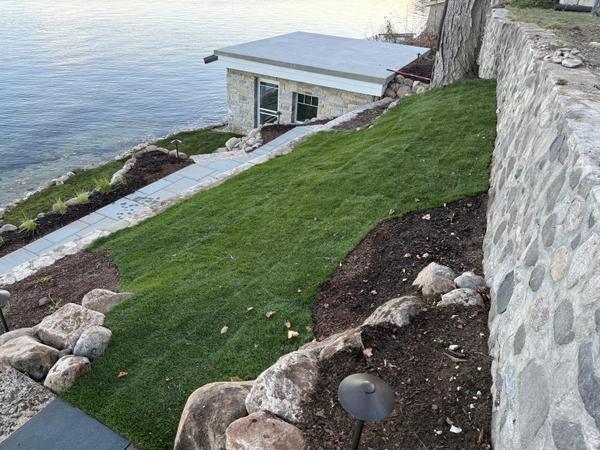
The setback is only one part of a broader Lakeside Living plan that considers stabilization, access, frontage layout, and long-term shoreline performance.
Can You Install a Patio Within the Setback?
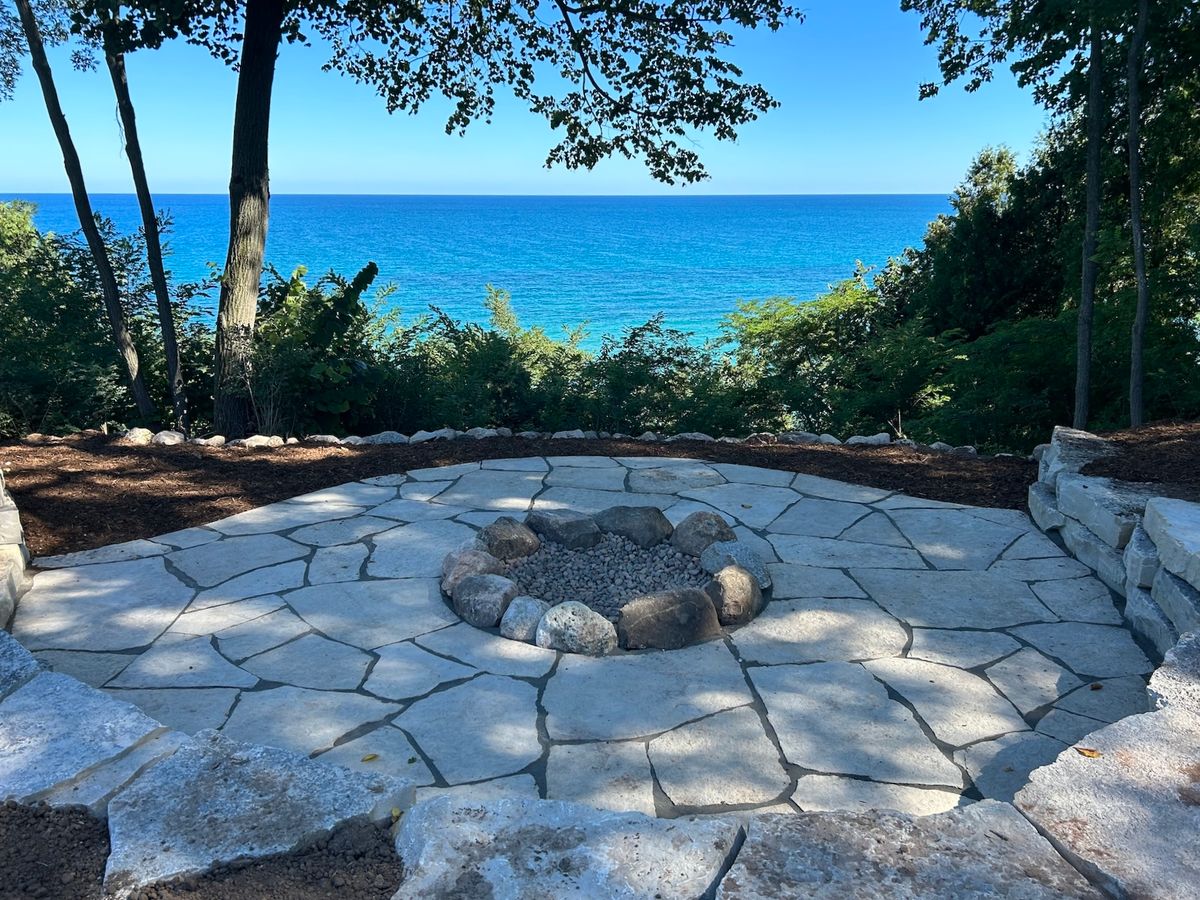
In general, new impervious surfaces such as patios are restricted inside the 75-foot setback unless a compliant surface already exists. Even replacing an older patio may require review if it increases total impervious area.
Common factors that influence approval include:
Total impervious surface percentage
Drainage direction and slope
Distance from the ordinary high-water mark
Whether the structure predates current zoning rules
If flexibility exists, positioning hardscape outside the setback typically reduces complications.
Are Lake Access Paths Allowed?
Most properties are permitted one defined access path from the home to the shoreline. That path is usually limited in width and should follow a direct route to minimize soil disturbance.
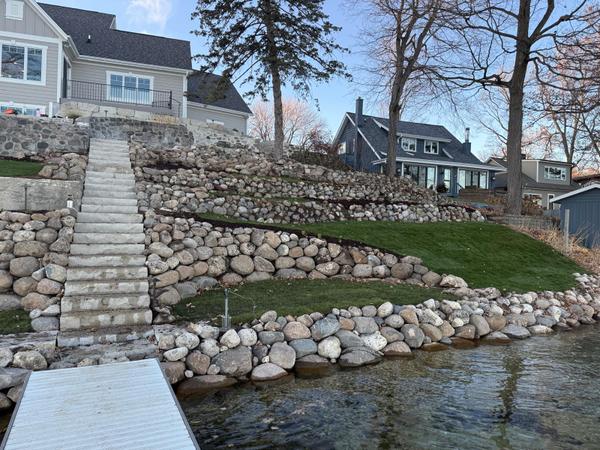
Stairs may also be allowed, especially on steeper terrain. Footing depth, structural support, and drainage integration often factor into review decisions.
Access is usually possible. Placement and documentation determine whether it is approved smoothly.
Careful alignment protects both shoreline stability and usability.
What About Retaining Walls or Shoreline Stabilization?
Shoreline stabilization inside the setback typically requires review, and understanding how shoreline permits work in Wisconsin before submitting plans often prevents unnecessary delays.
Retaining walls, seawalls, and erosion control systems are reviewed carefully to ensure they address documented erosion rather than simply adding structure near the water.
Approval may depend on:
Soil stability
Wave exposure
Existing erosion patterns
Drainage behind structural systems
Setback positioning
Living shoreline approaches may also be considered depending on slope and frontage width, and many homeowners compare living shoreline systems and retaining walls before selecting the right stabilization method.
The purpose of review is long-term shoreline performance, not short-term convenience.
How the 1,000-Foot Shoreland Zone Applies
Even if work occurs outside the 75-foot boundary, many properties within 1,000 feet of a lake remain subject to shoreland zoning rules.
This broader zone may affect:
Structural additions
Grading changes
Impervious surface totals
Conditional use requirements
Understanding both the immediate setback and the larger zoning area prevents surprises during permit review.
Common Mistakes That Create Delays
Permit complications often begin with small assumptions.
Homeowners sometimes:
Design without mapping the ordinary high-water mark
Assume replacing an existing structure requires no review
Ignore total impervious limits
Overlook drainage planning
Early clarification with local zoning officials reduces these risks.
A Practical Way to Plan Near the Shoreline
Responsible lakefront planning begins with confirmation.
Verify the ordinary high-water mark. Map the 75-foot setback accurately. Review impervious limits. Confirm whether a shoreline permit is required before finalizing design.
When those steps are handled early, projects tend to move forward with fewer revisions and more predictable timelines.
The 75-foot shoreland setback in Wisconsin establishes a boundary for responsible shoreline construction. When understood clearly, it becomes a planning framework rather than an obstacle.
Planning shoreline or lake access work? See how we approach Lakeside Living