
Landscape Lighting Design: Cost, Layout, and Common Mistakes
Landscape lighting design is often treated as an afterthought. It should not be.
Outdoor lighting influences safety, usability, and how a backyard feels at night. Poor placement creates glare, harsh shadows, or uneven brightness. Thoughtful placement enhances structure, highlights focal points, and improves navigation.
Lighting should feel natural and layered, not bright and overwhelming.
Before installation, it is important to understand what drives outdoor lighting cost and how layout decisions affect performance.
What Drives Outdoor Lighting Cost?
Outdoor lighting cost varies based on fixture count, wiring complexity, and system type.
Primary cost drivers include:
Number of fixtures
Transformer capacity
Wire runs and trenching distance
Fixture quality
Installation labor
Low voltage landscape lighting systems are the most common for residential projects. They provide flexibility and energy efficiency while allowing expansion over time.
Color changing landscape lighting systems increase cost due to upgraded fixtures and control systems.
Installation becomes more expensive when lighting is added after patios and planting are complete. Running wiring before final surface installation reduces disruption.
Designing for Layered Lighting
Effective landscape lighting design relies on layering rather than uniform brightness.
A balanced plan often includes:
Path lighting for safe navigation
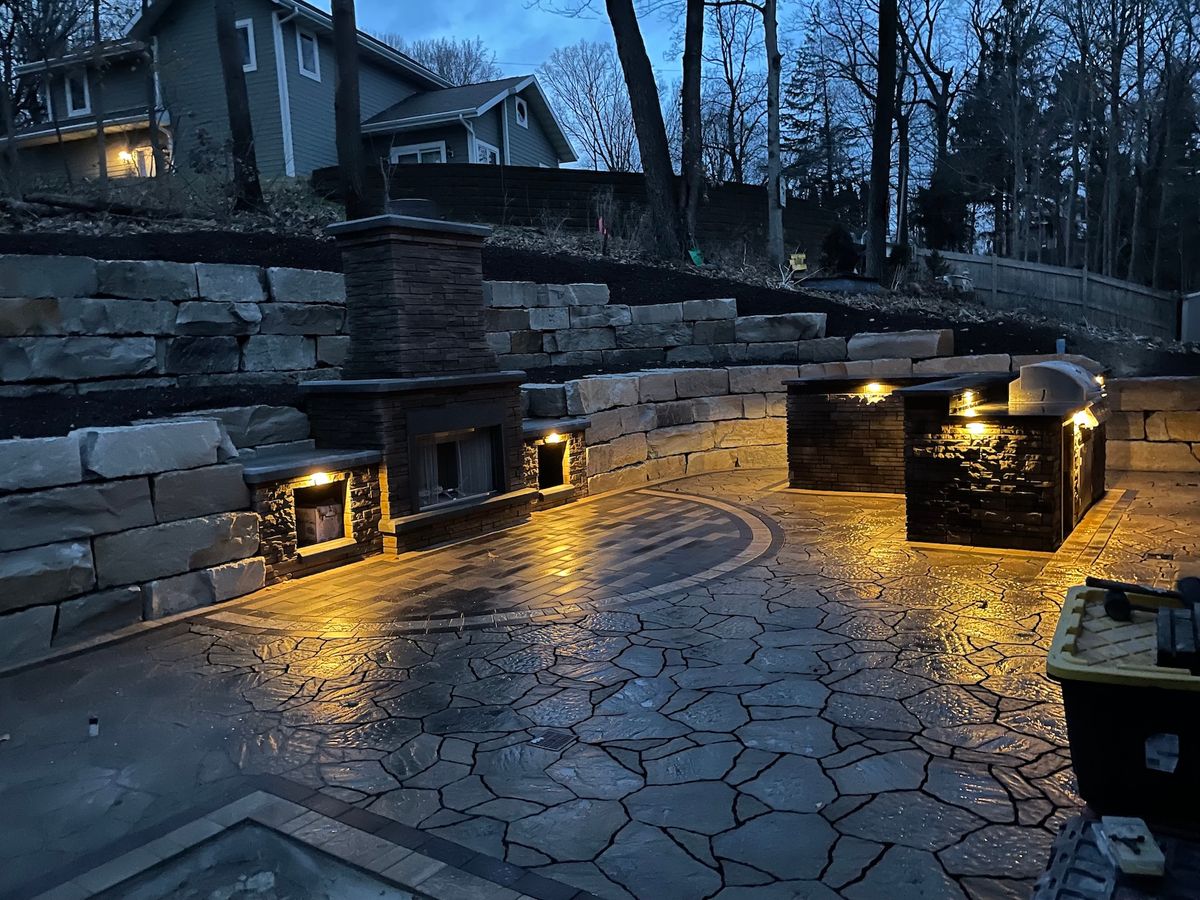
Step lighting integrated into retaining walls
Accent lighting on architectural features
Tree uplighting for depth
Subtle downlighting for ambient effect
Each layer serves a purpose. Together, they create dimension.
Over lighting is a common mistake. Too many fixtures create glare and visual clutter. Strategic placement delivers better results with fewer lights.
Placement Mistakes to Avoid
Many outdoor lighting issues stem from rushed placement.
Common mistakes include:
Fixtures placed too close together
Visible glare from poorly shielded lights
Ignoring beam spread angles
Lighting only the perimeter without layering
Failing to account for mature plant growth
Lighting should highlight focal points rather than compete with them.
Placement should also consider sight lines from inside the home. Night views matter as much as patio visibility.
Safety and Function
Landscape lighting design must support safe movement.
Key functional areas include:
Stair transitions
Elevation changes
Walkways between gathering zones
Entry points
Step lighting integrated into retaining walls improves both safety and visual continuity.
Low voltage landscape lighting systems should be installed with accessible transformers for future maintenance.
Water management also matters. Wiring should not sit in areas prone to pooling.
Color Changing Lighting
Color changing landscape lighting has become more common. Controlled via mobile applications, these systems allow homeowners to adjust tone for holidays or gatherings.
While flexible, they should be used selectively. Constant color shifts can diminish the natural atmosphere of the yard.
White light remains the most versatile option for daily use.
Planning Lighting During Design Phase
Lighting works best when integrated into patio lighting installation and hardscape planning from the beginning.
When lighting is added later, installers may need to:
Lift pavers
Trench through finished lawn
Modify planting beds
Planning early reduces labor and protects finished surfaces.
Landscape lighting design should be planned alongside patios, retaining walls, and planting layout. When layered correctly, it improves safety, enhances architecture, and extends outdoor living long after sunset.
Planning a patio, fire feature, or outdoor kitchen? See how we approach Outdoor Living Spaces