
Retaining Wall Installation: When You Need One and How to Build It Right
Retaining wall installation is often discussed as a design feature. In reality, it is usually a structural solution.
Homeowners sometimes ask whether they truly need a retaining wall or whether it is simply an aesthetic upgrade. The answer depends on slope, soil pressure, drainage, and how the backyard will be used.
A retaining wall should solve a structural problem first. Appearance comes second.
Understanding when a wall is necessary prevents unnecessary cost and prevents structural failure.
When Do You Actually Need a Retaining Wall?
A backyard retaining wall is typically required when elevation changes cannot be managed with simple grading.
Common situations include:
Steep slopes that limit usable space
Soil erosion near patios
Elevation differences between yard levels
Foundation exposure from runoff
Desire to create flat gathering areas
If slope can be managed with proper grading alone, a wall may not be required. However, when soil movement threatens structural stability, retaining wall installation becomes necessary.
The decision should be based on site conditions, not preference.
Structural Considerations
Retaining walls hold back soil. That soil exerts pressure.
Key structural factors include:
Soil type and density
Height of retained earth
Surcharge loads from patios or driveways
Frost depth
Water saturation levels
The taller the wall, the greater the pressure behind it. In Wisconsin climates, freeze thaw cycles increase soil movement and hydrostatic pressure.
Ignoring these factors often leads to leaning or bulging walls within a few seasons.
Drainage Is the Real Determining Factor
Retaining wall drainage determines whether the wall performs long term.
Water trapped behind a wall increases pressure dramatically. Proper drainage systems reduce that pressure and protect structural integrity.
Effective drainage planning includes:
Compacted aggregate base
Drain tile behind the wall
Clean backfill material
Weep systems or relief outlets
Surface grading that directs water away
Without drainage, even a well built stone retaining wall can fail prematurely.
Drainage planning is not an add on. It is foundational.
Material Options
Retaining wall cost varies based on material selection and installation complexity.
Common options include:
Segmental concrete block systems
Natural stone retaining wall construction
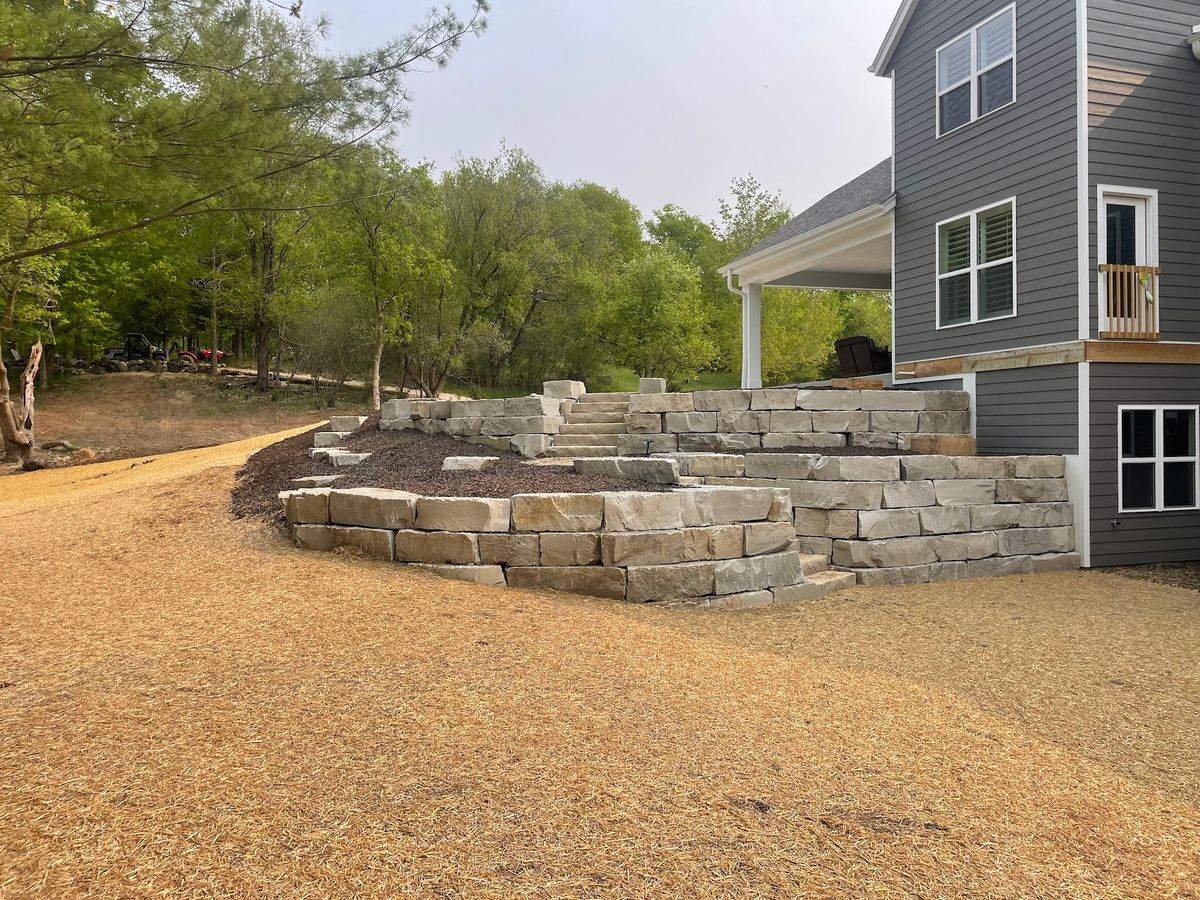
Outcropping stone walls
Engineered reinforced systems
Natural stone provides organic appearance but requires skilled placement. Engineered block systems offer consistent structural performance.
Material choice should align with overall hardscape design while meeting structural requirements.
What Drives Retaining Wall Cost?
Retaining wall cost is influenced by more than visible stone.
Major cost drivers include:
Excavation depth
Base preparation
Drainage integration
Wall height
Access limitations
Reinforcement requirements
A short decorative wall costs significantly less than a structural wall holding back multiple feet of soil.
Understanding this distinction prevents unrealistic budgeting.
Common Mistakes
Many retaining wall problems stem from shortcuts.
Typical issues include:
Inadequate base depth
No drainage behind the wall
Overly tall walls without reinforcement
Poor compaction
Ignoring slope runoff above the wall
These mistakes often appear stable at first. Problems usually emerge after heavy rain or seasonal freeze thaw cycles.
Retaining wall installation should prioritize long term structural stability rather than speed.
Integrating Walls Into Outdoor Living Design
When designed correctly, retaining walls create usable outdoor living space.
Walls can:
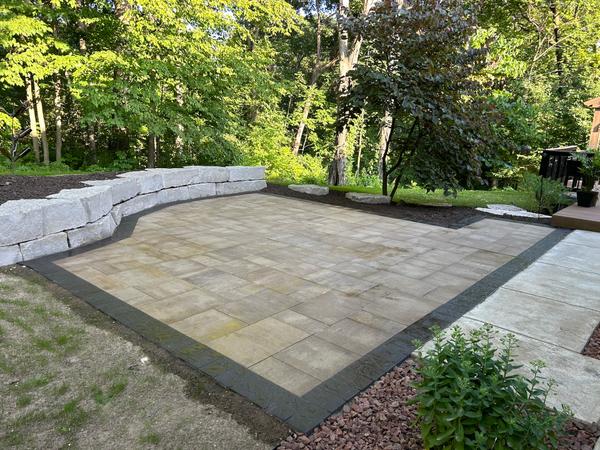
Define patio edges
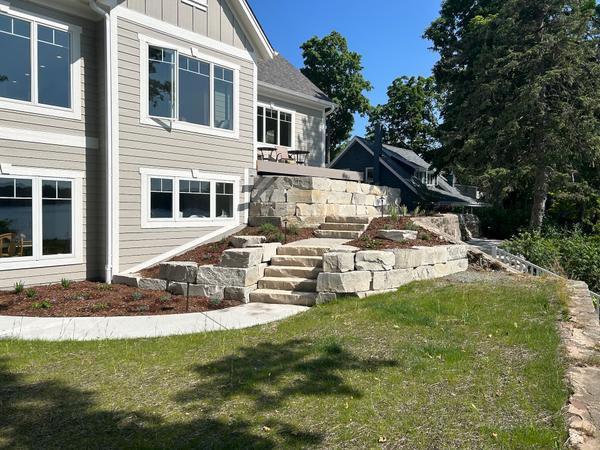
Create tiered gathering zones
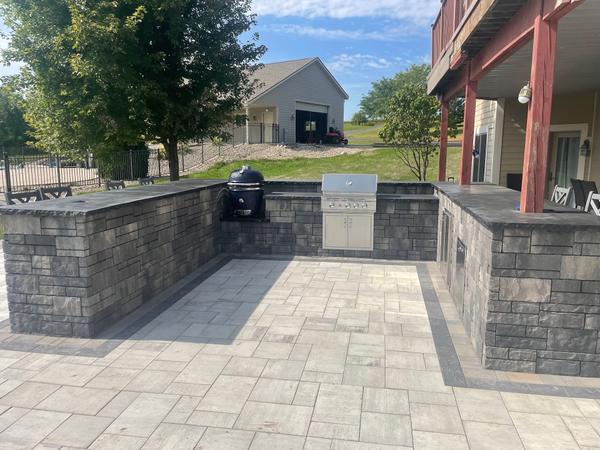
Incorporate built in seating
Support planting beds
Improve traffic flow across slopes
Structural necessity and visual cohesion can work together.
A wall should feel intentional within the yard rather than imposed.
Retaining wall installation should be treated as structural work, not surface decoration. When drainage, base preparation, and material selection are handled correctly, the wall protects your investment and expands usable outdoor space.
Planning a patio, fire feature, or outdoor kitchen? See how we approach Outdoor Living Spaces