

Landscape stairs
Landscape stairs that hold through every Wisconsin season
Natural stone and flagstone steps built for sloped yards and lakefront sites, designed as part of the hardscape system around them.
Plan landscape stairs that fit your grade and your property
Get your sloped site assessed and walk away with a clear plan for safe, lasting access.
A slope without safe access is a liability
Grade changes are one of the most common challenges on residential lots in southeastern Wisconsin, and one of the most overlooked. A steep backyard or a lakefront drop-off that lacks proper steps forces people to navigate uneven ground, worn paths, or improvised footing every time they move between levels. Over time, that becomes a safety issue. Landscape stairs solve the grade problem structurally, not cosmetically. They create a defined, stable path between elevations that holds up under foot traffic, freeze-thaw cycles, and the kind of wet conditions that come with lakefront sites. When stairs are built as part of a coordinated hardscape system rather than added as an afterthought, they perform differently and they last.
Material choice shapes how stairs perform long-term
Flagstone and natural stone are the primary materials used here because they handle Wisconsin's seasonal demands better than most alternatives. They don't rely on a surface coating that can peel, they tolerate ground movement without cracking across the full run, and they age in a way that fits the landscape rather than fighting it. Flagstone steps suit informal settings and naturalistic designs. Cut natural stone works where the geometry is more formal or where the stairs need to read as part of a patio or retaining wall system. The right choice depends on grade, traffic, the surrounding materials, and how the steps connect to the rest of the backyard renovation project.
Structural preparation is what most stair projects skip
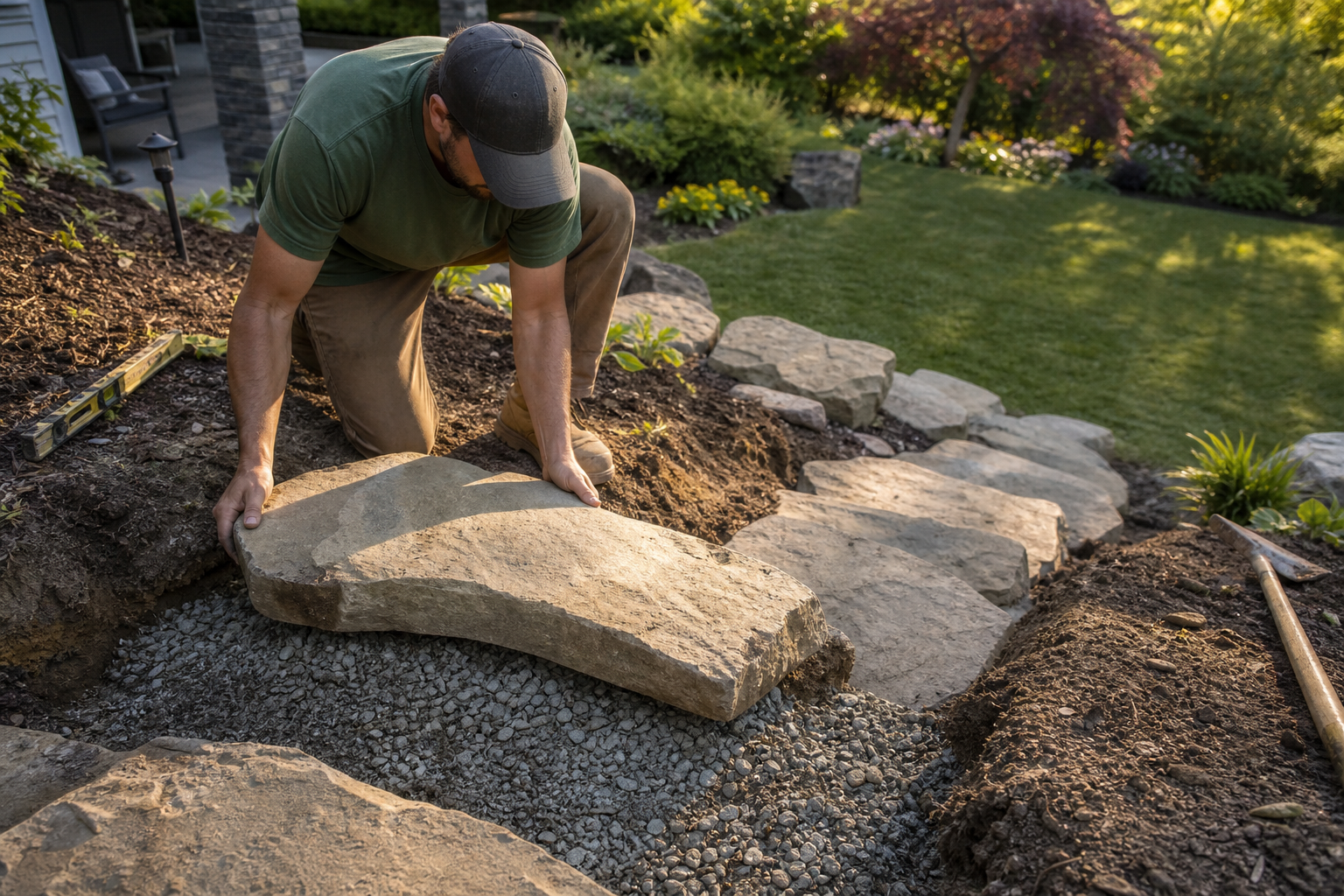
The steps themselves are only as good as what's underneath them. On sloped sites, especially lakefront properties with unstable soil or drainage pressure, a stair run that isn't properly prepared will shift, settle, and separate within a few seasons. The base work, the compaction, the drainage management, and the integration with adjacent retaining walls or hardscape edges matter as much as the stone on top. McGuire coordinates drainage solutions alongside stair construction wherever the grade or soil conditions call for it, so water isn't channeling under or alongside the steps after the first heavy rain. That preparation is what distinguishes stairs that hold from stairs that need to be rebuilt.
Stairs designed as part of the whole site
Landscape stairs don't exist in isolation. They connect a patio to a lower lawn, a lakefront seating area to a pier, or a side grade to a backyard living space. When they're designed alongside the surrounding hardscape, the transitions read as intentional rather than patched together. Lighting integrated into or alongside the stair run makes the path usable after dark and adds to the overall character of the space. If you're planning landscape lighting or a fire feature as part of the same project, the stair design factors into where those elements land and how the whole system flows.
The steps themselves are only as good as what's underneath them, and that part of the work is never visible once the project is complete.
Highlights
- Flagstone and natural stone options suited to sloped residential and lakefront sites
- Structural base preparation and drainage management included where site conditions require it
- Belgard Authorized Contractor designation held by McGuire Landscape Company
- Stairs designed as part of the surrounding hardscape system, not added independently
- Experience with Wisconsin DNR shoreland requirements on lakefront stair projects
How a landscape stair project comes together
- 1
Assess the grade and site conditions
The process starts with a site visit to understand the elevation change, soil conditions, drainage patterns, and what the stairs need to connect. On lakefront properties, this includes looking at shoreline conditions and any setback or access constraints. The site assessment shapes every decision that follows, from material selection to base preparation requirements.
- 2
Design the stair run and material selection
Rise, run, width, and landing placement are worked out relative to the grade and the surrounding hardscape. Flagstone or natural stone is selected based on the design context, the adjacent materials, and how the stairs will be used. If the stairs connect to a patio, retaining wall, or outdoor kitchen area, those relationships are designed together rather than resolved separately.
- 3
Prepare the base and manage drainage
Excavation, compaction, and base preparation are done to the standard the site demands, not a minimum. Where drainage pressure exists alongside or beneath the stair run, that's addressed before any stone goes down. Proper base preparation is the step most responsible for long-term performance, and it's not visible once the project is complete, which is why it's easy to skip and costly when it's skipped.
- 4
Set and finish the stone
Stone is set with attention to level, joint consistency, and the way each step reads visually and functionally as part of the run. Edges are finished to integrate with adjacent lawn, planting beds, retaining walls, or hardscape borders. The completed stairs are reviewed against the original grade to confirm the access path performs as designed.
Benefits
Safe access across every grade change
Properly built landscape stairs eliminate the uneven footing and improvised paths that develop on sloped sites. Defined, stable steps mean the grade change becomes a usable part of the property rather than something to work around.
Stone that handles Wisconsin winters
Flagstone and natural stone tolerate freeze-thaw cycles without the surface failures that affect coated or poured alternatives. Material selection matched to the site means the stairs perform the same way in year five as they do in year one.
Base prep that prevents future settling
Excavation, compaction, and drainage management done before the stone goes down is what keeps stairs from shifting and separating. Structural preparation underneath the steps is the difference between stairs that hold and stairs that need to be rebuilt.
Integrated with the surrounding hardscape
Stairs designed alongside the patio, retaining walls, and lighting around them read as part of the site rather than an addition. Coordination across the full hardscape system means transitions work visually and functionally from the start.
Landscape stairs for different site conditions
Lakefront property with steep bank access
A lakefront homeowner with a significant grade change between the lawn and the water's edge needs a stair run that handles wet conditions, unstable soil, and heavy seasonal use. Natural stone steps set into the bank with proper drainage management create a path that stays stable through freeze-thaw cycles and doesn't erode alongside the shoreline. The stairs are designed to connect with the broader lakefront hardscape, including any pier walkway or seating area at the water level.
Sloped suburban backyard with patio connection
A homeowner with a yard that drops several feet from the house to the lower lawn wants to make the full depth of the property usable. Landscape stairs connect an upper patio to a lower lawn or garden area, turning a slope that was previously avoided into a navigable part of the yard. When landscape lighting is added along the stair run, the path becomes functional in the evening as well, extending how the outdoor space gets used.
Side grade connecting driveway to backyard
Many residential lots in Washington, Waukesha, and Ozaukee Counties have awkward side grades that make moving between the driveway and the backyard inconvenient or unsafe. Flagstone steps set into the grade create a defined, stable path that eliminates the worn-grass shortcut and integrates with the surrounding planting or hardscape. This kind of project is often part of a broader backyard renovation that addresses multiple grade and access challenges at once.
Common questions about landscape stairs
Stop navigating your slope without a real solution
If your property has a grade change that makes part of the yard hard to reach or unsafe to navigate, that's a problem worth solving before another season goes by. Reach out to talk through what the site requires and what a stair project would involve.
Talk about your stair project