
GP26 Riprap Permit Checklist for Wisconsin Lakefront Owners
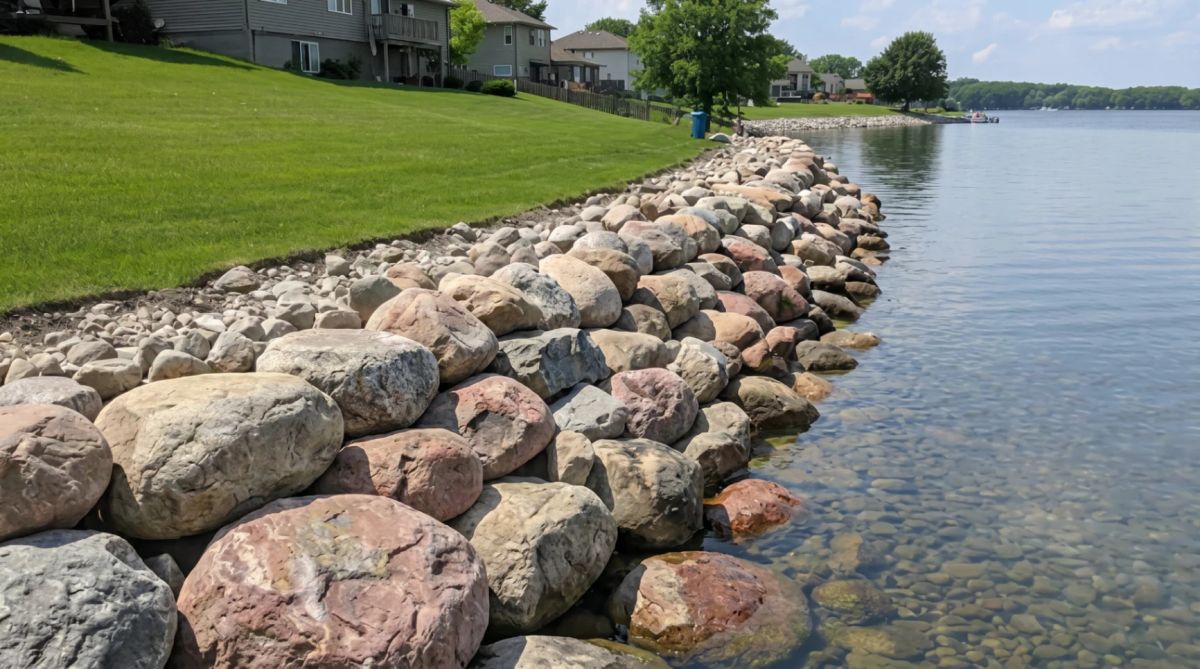
Riprap is the workhorse of Wisconsin shoreline protection. Done correctly, it absorbs wave energy, holds the toe of the bank, and outlasts almost every other shoreline treatment. Done outside DNR specifications, it gets cited, has to come out, and costs the homeowner twice. The fastest, most predictable approval path for riprap on a Wisconsin lake is the GP26 General Permit.
What GP26 Covers
GP26 is one of several general permits issued under Chapter 30 of the Wisconsin Statutes. It authorizes the placement of riprap for shore erosion protection on inland lakes and impoundments, provided the project meets every condition in the permit. If the project meets the conditions, the DNR's review window is 30 days and the standards are predictable. If it misses any condition, the project drops into the individual permit track, with a longer review and case-by-case conditions.
The Field Checklist
Before we submit a GP26 application, we walk the shoreline and verify each of these in person. This is the same checklist a DNR reviewer will use against the photos and site plan we submit.
1. Length of Treatment
- The riprap segment must fall within the GP26 length cap for the property frontage
- If the project would extend beyond the cap, an individual permit is required
2. Slope
- Riprap must be placed on a slope no steeper than the GP26 standard (typically 2H:1V or flatter)
- Steeper banks must be regraded before stone placement, which can trigger separate erosion control review
3. Stone Size and Type
- Angular fieldstone or quarry stone within the GP26 size range
- Sized to the wave fetch and ice action of the specific lake, a Pewaukee shore is not a Big Cedar shore
- Filter fabric or graded filter stone underneath
4. Footprint Below Ordinary High Water
- Encroachment beyond the OHWM must stay within the GP26 limit
- The toe-of-stone location is the most common reason a GP26 gets bumped to individual review
5. Vegetation and Buffer
- Native vegetation behind the riprap is expected
- Some counties require a planted buffer band as a condition of local approval
What We Submit
- Completed DNR Form 3500-161 with the GP26 box marked
- Scaled site plan with frontage dimensions, riprap length, and OHWM
- Cross-section showing slope, stone size, filter, and toe
- Pre-construction photos along the entire treatment area
- Narrative describing erosion conditions that justify the work
When Riprap Is the Wrong Answer
Riprap is not always the right tool. On lower-energy shores or where habitat goals matter, biostabilization or a hybrid living shoreline often outperforms hard armoring. We cover that decision in biostabilization vs. seawalls in Wisconsin freeze-thaw and living shoreline vs. retaining wall.
Why This Matters for Your Project
The GP26 path is fast when the project is built around it from the start. It is slow and expensive when a homeowner buys stone and starts placing it before checking the footprint and slope. We design every riprap project to GP26 standards by default and only go to an individual permit when the site genuinely requires it.
If you are evaluating shore protection on a southeastern Wisconsin lake, schedule a site visit. We will measure the bank, check the toe, and tell you whether GP26 is realistic for your shoreline.
Planning shoreline or lake access work? See how we approach Lakeside Living