

Is Stainless Steel Right for Your Outdoor Kitchen? What to Know
Stainless steel outdoor kitchens: what holds up and what to watch for
Understanding grades, maintenance, and climate fit before you commit to stainless steel.
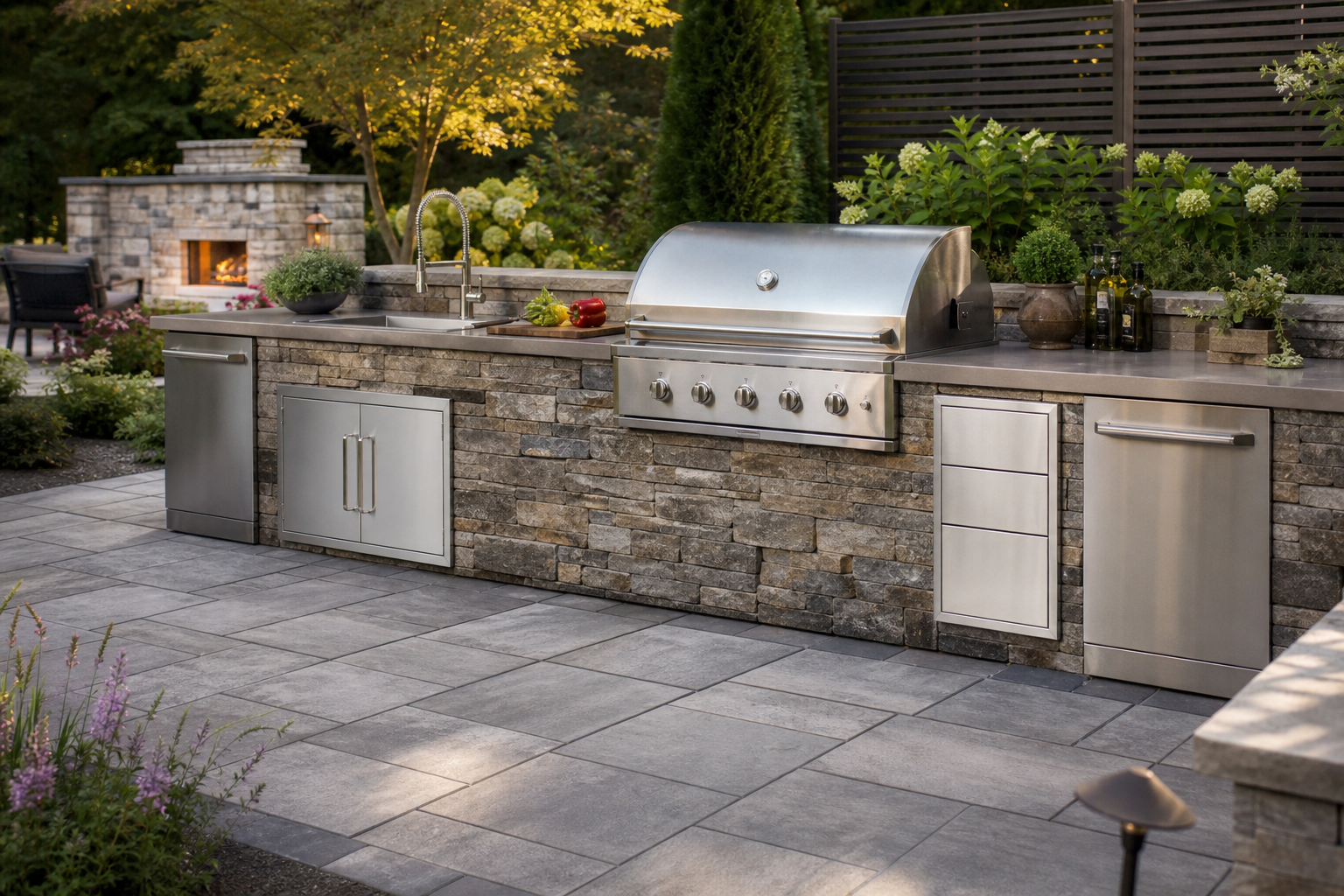
Plan an outdoor kitchen built to last through every season
Explore outdoor kitchen designs that work in Wisconsin's climate and get the details you need before you build.
Why stainless steel dominates outdoor kitchen builds
Stainless steel has become the default material for outdoor kitchen cabinets, countertops, and appliances for practical reasons: it resists rust, handles heat without warping, and holds up against moisture, UV exposure, and the kind of temperature swings that destroy lesser materials over a few winters. For homeowners in southeastern Wisconsin, where outdoor kitchens face freezing temperatures, spring humidity, and summer heat in the same calendar year, those properties matter considerably.
That said, stainless steel is not a single uniform product. The grade of steel determines how well it actually performs outdoors, and choosing the wrong grade is one of the most common mistakes homeowners make when pricing out an outdoor kitchen. A cabinet that looks identical to a premium unit at the point of sale may behave very differently after two or three seasons of real outdoor exposure. If you are planning an outdoor kitchen, understanding the material is the right place to start.
Grade 304 versus 430: the difference that matters most
The two grades you will encounter most often are 304 and 430. 304-grade stainless steel contains roughly 18% chromium and between 8% and 10% nickel, which is what gives it strong resistance to corrosion from moisture, cleaning chemicals, and environmental exposure. It is the same grade specified for food processing equipment and outdoor architectural projects where long-term performance is required.
430-grade stainless steel contains a similar chromium level (around 16 to 17%) but contains no nickel, which is the element that makes 304 so much more resistant to sustained outdoor moisture. In practice, 430 performs acceptably in many indoor applications but can spot, streak, and develop surface rust within a few seasons when exposed to rain, humidity, or salt air. The higher nickel content in 304 comes at a higher cost, but for an outdoor installation that is meant to last, it is the standard recommendation.
For properties near saltwater or chlorinated pools, some manufacturers also offer 316-grade (marine-grade) stainless steel, which has enhanced corrosion resistance beyond even 304.
Cosmetic realities: scratches, fingerprints, and finish choices
Stainless steel is durable, but it is not impervious to cosmetic wear. Fingerprints show readily on most finishes, and scratches accumulate with normal use over time. These are not structural problems, but they do affect how the kitchen looks and how much upkeep it requires.
Finish type plays a role here. Brushed stainless steel is the most common choice for outdoor kitchens and tends to hide fingerprints better than a mirror polish, but brushed finishes can also be slightly less resistant to corrosion than a smoother surface, since the micro-texture created by brushing can trap moisture and contaminants if not cleaned regularly. Whatever finish you choose, cleaning with the grain of the metal (following the visible polishing lines) and drying surfaces completely after washing will reduce both cosmetic wear and the risk of surface corrosion over time. If your outdoor kitchen design includes stainless components alongside stone countertops or other materials, the maintenance rhythms for each surface will differ.
Maintenance requirements by climate and location
How often you need to clean stainless steel depends significantly on where the kitchen sits. For properties in coastal areas or adjacent to a chlorinated pool, cleaning all stainless steel surfaces at least every two weeks is the recommended baseline to prevent chloride buildup that accelerates corrosion. In non-coastal environments without pool proximity, a thorough cleaning every three months is generally sufficient, with monthly polishing to maintain appearance and add a layer of protection against fingerprints and moisture.
The cleaning method matters as much as the frequency. Use soapy water, rinse thoroughly, and dry completely. Never use steel wool or abrasive scrubbers, which cause mechanical abrasion that damages the surface and makes it more susceptible to corrosion. Avoid household cleaners that contain chlorides for the same reason. A dedicated stainless steel polish, applied along the grain of the metal, is the right tool for removing stains and smudges. Passivation treatments, which restore the chromium oxide layer that gives stainless steel its corrosion resistance, are an option for surfaces that have been scratched or exposed to harsh conditions.
How stainless steel fits into a coordinated outdoor kitchen build
Stainless steel cabinets and appliances are almost always one component of a larger outdoor kitchen system, not a standalone purchase. The material choice for cabinets and countertops needs to coordinate with the surrounding hardscape: the patio surface, the countertop material, any built-in fire features, and the structural base that supports the whole installation.
In Wisconsin's climate, that base and the surrounding hardscape need to handle freeze-thaw cycles without heaving or cracking, which is a separate but equally important consideration from the stainless steel itself. A well-built outdoor kitchen integrates the appliances and cabinetry into a structure that is designed from the ground up for outdoor conditions, rather than adapting indoor cabinet systems to an outdoor setting. The same logic applies to the broader outdoor living space: materials need to be chosen and detailed together so the whole system performs consistently over time.
Stainless steel grades at a glance
The grade you specify determines how your outdoor kitchen holds up over time.
- 430-grade stainless
- Suited to indoor or sheltered applications with minimal moisture exposure.No nickel content; more prone to surface rust outdoors.
- 304-grade stainless
- The standard recommendation for outdoor kitchens in most climates.18% chromium, 8-10% nickel; strong corrosion resistance.
- 316-grade (marine) stainless
- Best suited to coastal environments, salt air, or poolside installations.Enhanced corrosion resistance beyond 304; higher material cost.
For most Wisconsin homeowners, 304-grade is the practical standard. Lakefront or poolside kitchens with heavy exposure are the cases where 316 is worth evaluating.
The grade of steel in your outdoor kitchen matters more than the brand name stamped on the door.
How to evaluate stainless steel for your outdoor kitchen
- 1
Confirm the steel grade before purchasing
Ask specifically whether cabinets, countertops, and appliances are made from 304-grade or 430-grade stainless steel. 304 is the standard for outdoor use because its nickel content resists moisture and corrosion far better than 430. If a product listing does not specify the grade, treat that as a reason to ask or look elsewhere. For sites near salt air or a chlorinated pool, ask whether 316-grade marine stainless is available.
- 2
Assess your site's exposure conditions
Consider how much direct weather exposure your kitchen will face: full sun, prevailing wind direction, proximity to water, and whether a roof or pergola will provide any shelter. More exposure means faster cosmetic and structural wear, which affects both the grade you should specify and the maintenance schedule you should plan for. A kitchen on an open lakefront deck faces different conditions than one tucked under a covered patio.
- 3
Choose a finish that fits your maintenance tolerance
Brushed stainless steel is the most practical finish for most outdoor kitchens because it hides fingerprints better than polished surfaces and blends well with stone and paver surroundings. Understand that any brushed finish requires cleaning along the grain to avoid cross-grain scratches that trap moisture. If low maintenance is a priority, factor that into your finish decision alongside aesthetics. You can explore how stainless fits into broader outdoor kitchen design ideas to see how different finishes read in a completed space.
- 4
Plan your cleaning and maintenance routine
Before the kitchen is installed, decide on a realistic maintenance schedule. For most Wisconsin homeowners away from the lake, a thorough clean every three months and a monthly polish is a workable baseline. Coastal or poolside kitchens need cleaning every two weeks to prevent chloride damage. Stock the right supplies: mild soap, a dedicated stainless steel polish, non-abrasive cloths or scrubbers, and nothing containing chlorides or steel wool.
- 5
Integrate stainless into the broader hardscape design
Stainless steel cabinets and appliances perform best when they are built into a structure designed for outdoor conditions from the start, not retrofitted into a frame meant for indoor use. Work with your designer to ensure the base structure, countertop material, and surrounding patio design are all specified together. In Wisconsin, that means accounting for freeze-thaw movement in the base and any adjacent hardscape so the whole installation moves as a unit rather than pulling apart over time.
- 6
Consider seasonal protection and storage
Even 304-grade stainless benefits from some protection during Wisconsin winters. Covering appliances and cabinets during the off-season reduces exposure to road salt spray, freeze-thaw moisture cycles, and debris that can scratch surfaces. Breathable covers designed for outdoor kitchen use allow moisture to escape while blocking direct precipitation and contaminants. A brief inspection and cleaning at the start of each season helps catch any surface issues before they develop into deeper corrosion.
Benefits
Corrosion resistance that holds outdoors
304-grade stainless steel resists moisture, cleaning chemicals, and environmental exposure because its nickel content forms a stable chromium oxide layer that self-repairs when scratched at a microscopic level, making it the grade specified for food processing and outdoor architectural applications.
Heat tolerance for cooking environments
Stainless steel handles the heat generated by grills, burners, and outdoor cooking without warping or degrading, making it a practical countertop and cabinet material in direct proximity to heat sources.
Longevity through Wisconsin's seasonal swings
Unlike wood, tile, or polymer cabinets, stainless steel does not absorb moisture or crack under freeze-thaw cycling, giving it a durability advantage in climates where outdoor materials face repeated expansion and contraction.
Grade-specific performance you can specify
Because stainless steel grades are standardized, you can specify 304 or 316 by name when purchasing cabinets and appliances and verify what you are getting, rather than relying on marketing descriptions like 'commercial grade' or 'heavy duty' that have no fixed meaning.
Maintainability with the right routine
A consistent cleaning schedule using mild soap, a dedicated polish, and non-abrasive tools keeps stainless steel performing and looking well for years. Monthly polishing adds a layer of protection against fingerprints and moisture between deeper cleanings.
Situations where the grade decision really matters
Lakefront kitchen with open water exposure
A homeowner building an outdoor kitchen on an open lakefront deck faces wind-driven moisture and, in some cases, salt or mineral content in the air depending on the water body. In this situation, 304-grade stainless steel is the minimum practical specification, and 316-grade marine stainless is worth pricing out for cabinets and countertops that will be fully exposed. The higher upfront material cost is offset by avoiding early surface rust and the labor involved in refinishing or replacing corroded components. This type of build also needs to coordinate with the broader lakefront outdoor living space so that all materials perform consistently in the same environment.
Suburban backyard kitchen near a pool
Chlorinated pool water, splash, and airborne chlorine around a residential pool create conditions that are harder on stainless steel than ordinary rain exposure. Chlorides accelerate corrosion on any grade of stainless, making the cleaning schedule more demanding: every two weeks rather than quarterly. A homeowner in this situation should specify 304-grade at minimum, use only chloride-free cleaners, and plan to rinse and dry surfaces after heavy pool use. Positioning the kitchen to minimize direct splash exposure is also a practical design consideration when planning the outdoor kitchen layout.
Covered patio kitchen with moderate exposure
An outdoor kitchen built under a pergola or covered structure sees significantly less direct precipitation and UV exposure than a fully open installation. In this scenario, 304-grade stainless remains the right choice for long-term performance, but the maintenance demands are lower and the cosmetic wear from weather is reduced. The bigger day-to-day concern shifts to fingerprints and grease from cooking, which a monthly polish and routine wipe-down after use will manage effectively. A covered kitchen also integrates more naturally into a designed patio space where the materials and finishes can be coordinated more precisely.
Phased outdoor kitchen added to an existing patio
Homeowners who are adding an outdoor kitchen to an existing patio in a later phase of a backyard renovation need to verify that the existing hardscape base can support the weight and that the structural framing for the kitchen is designed for outdoor conditions. Stainless steel cabinets built on a frame that was not designed for outdoor use will face corrosion and structural issues at the frame level regardless of the cabinet grade. This is a case where the material choice and the underlying construction method need to be evaluated together rather than treating the stainless steel as the only variable.
Is stainless steel right for your outdoor kitchen
Ready to plan an outdoor kitchen that holds up season after season
Choosing the right materials is one part of building an outdoor kitchen that performs well over time. McGuire Landscape Company designs and builds outdoor kitchens as part of coordinated outdoor living spaces in Washington, Waukesha, and Ozaukee Counties, with full attention to the structural and material details that matter in Wisconsin's climate. Reach out to talk through your site and what a well-built outdoor kitchen would look like for it.
Talk to an outdoor kitchen designer