

Flagstone Patio Ideas: Natural Stone Designs for Outdoor Living
Natural stone patio design: choosing and laying flagstone that lasts
From stone selection to installation method, here is what shapes a flagstone patio's look, performance, and longevity.
Plan a flagstone patio that performs through Wisconsin winters
Explore the design decisions that shape a flagstone patio and bring your outdoor living space to life.
What flagstone actually is and why it varies so much
Flagstone is a broad category, not a single material. The term covers any large, flat stone slab used for paving, and products sold under that name can include sandstone, slate, limestone, quartzite, and Pennsylvania bluestone, among others. Because each material has genuinely different characteristics, a homeowner cannot assume that all flagstone will perform the same way in the same climate. Thickness varies too: slabs are typically milled between 1 and 2.5 inches, with some slate products running as thin as 0.75 inches. That range matters for structural load, installation method, and how the finished surface handles the freeze-thaw cycles common in southeastern Wisconsin.
Stone types and how each one performs outdoors
Bluestone is one of the most widely used choices for patios and walkways across North America. Its dense structure makes it highly resistant to moisture and freeze-thaw cycles, which is a meaningful advantage in Wisconsin's climate. Slate carries a water absorption rate under 0.4% by weight per ASTM C629, making it well suited to cold climates, though sealing is still recommended in freeze-thaw regions to prevent surface damage over time. Limestone suits formal landscape settings and performs well in humid climates, but it can be affected by acidic substances and its weight can complicate installation. Sandstone and quartzite round out the common options, each with its own texture, color range, and porosity profile. Choosing the right stone starts with matching the material's actual properties to your site conditions and design goals, not just its appearance in a showroom.
Dry-laid versus mortared: the installation decision that shapes everything
The two primary installation methods produce very different results. Dry-laid flagstone places stones on a compacted gravel base covered with coarse sand, with a base depth of at least 3 inches recommended. Joints can be filled with sand, planted with groundcover, or mortared separately. This method allows better drainage and makes individual stones easier to remove and replace if settling occurs. The trade-off is that dry-set installations are more prone to shifting and heaving through freeze-thaw cycles, and without a sealant, sand can track onto adjacent surfaces. Mortared flagstone is set over a concrete slab with mortar-filled joints, creating a rigid, permanent surface that is less prone to movement over time. It is the more stable choice for formal outdoor living areas and for installation over an existing slab. Understanding these differences before construction begins is part of planning a patio that performs over the long term.
Pattern and joint choices that define the visual style
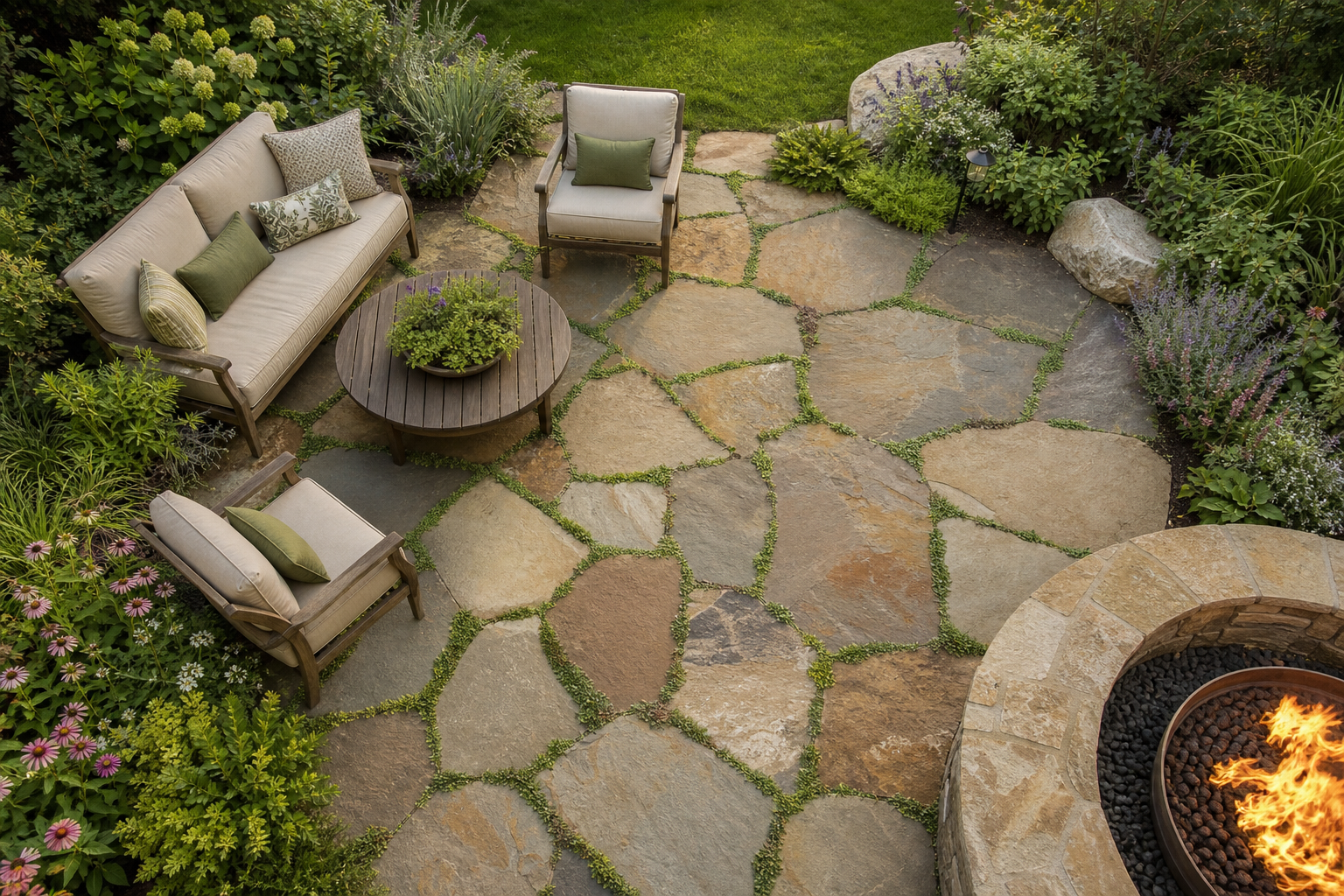
Flagstone's design range runs from rustic and naturalistic to clean and contemporary, and the pattern you choose is the primary driver of that character. A random irregular layout uses stones of varying shapes and sizes with no repeating geometry, emphasizing the material's natural character and suiting informal garden settings. Ashlar patterns introduce more structure by using stones with at least one straight edge, creating rows or coursed arrangements that read as more formal. Geometric layouts, where stones are cut to consistent shapes, move closest to the look of manufactured pavers while retaining the texture and color variation of natural stone. Joint width is a parallel decision: tight joints with mortar read as refined, while wider joints planted with creeping thyme or moss soften the surface and blur the line between hardscape and planting. Edging material, whether cut stone, steel, or a planted border, also anchors the patio's relationship to the surrounding outdoor living space.
Drainage, maintenance, and long-term durability in Wisconsin
Wisconsin's freeze-thaw seasons put real stress on any paved surface, and flagstone is not exempt. Water that penetrates joints or the stone itself expands when it freezes, and repeated cycles can crack or heave slabs over time. Proper base preparation, adequate slope for surface drainage, and sealing porous stones are the practical responses to that reality. Dry-laid installations need periodic re-leveling as the base settles. Mortared installations can develop cracked joints that allow water to pool beneath the slab if not repaired promptly. Stone type matters here too: denser materials like bluestone and properly sealed slate hold up better than more porous options. If your patio connects to a slope or sits near a downspout discharge zone, integrating a drainage solution into the design from the start prevents the most common long-term problems.
The stone you choose and the method you use to set it are two decisions that shape everything else about the patio's performance and maintenance for years to come.
How to plan a flagstone patio step by step
- 1
Define the space and its function
Start by deciding what the patio needs to do: dining, lounging, cooking, or a combination. The function determines the size, shape, and whether the layout needs to accommodate features like an outdoor kitchen or a fire element. A space that tries to do everything without enough square footage will feel cramped regardless of how beautiful the stone is.
- 2
Choose the stone type for your site conditions
Match the stone to your climate and site. In southeastern Wisconsin, freeze-thaw resistance is a primary filter: bluestone and properly sealed slate are strong performers. Consider the stone's porosity, surface texture (smooth stones can be slippery when wet), and how its color range fits the surrounding architecture and plantings. Request samples in natural light before committing.
- 3
Decide on dry-laid or mortared installation
If you are working over bare ground with good drainage and want a more naturalistic, garden-integrated look, dry-laid on a compacted gravel and sand base is a practical approach. If you want a formal, low-movement surface or are installing over an existing concrete slab, a mortared bed is the more stable choice. This decision also affects your drainage strategy, so it should be made before the base is prepared, not after.
- 4
Select a pattern and joint treatment
Random irregular layouts suit informal settings and make the most of irregularly shaped stone. Ashlar and geometric patterns require more cutting and labor but produce a more structured result. Joint treatment, whether sand, mortar, or planted groundcover, should be chosen alongside the pattern, since the two decisions together determine the surface's final character and its maintenance needs. See backyard patio design ideas for visual examples of how these choices play out in real projects.
- 5
Prepare the base properly
A stable, well-drained base is what separates a flagstone patio that holds up for years from one that starts heaving after the first hard winter. For dry-laid installations, at least 3 inches of compacted gravel topped with coarse sand is the recommended minimum. Mortared installations require a sound concrete slab beneath the stone. Slope the base away from the house and any structures to direct surface water away from foundations.
- 6
Plan for sealing and ongoing maintenance
Sealing is not optional for porous stones in freeze-thaw climates. It reduces water infiltration, limits staining, and for dry-laid installations, helps keep sand in the joints rather than tracked across adjacent surfaces. Re-sealing frequency depends on the stone type and traffic level. Mortared joints should be inspected periodically and repointed where cracking appears, since open joints allow water to reach the base and accelerate heaving.
Benefits
Freeze-thaw durability with the right stone
Dense stones like bluestone and properly sealed slate are highly resistant to moisture infiltration, making them well suited to Wisconsin's repeated freeze-thaw cycles when installed correctly.
Design range from rustic to contemporary
Pattern choices, joint treatments, and stone selection can produce results ranging from a loose, garden-integrated surface to a structured, formal entertaining area, all using natural stone.
Dry-laid installations are easier to repair
Because dry-set stones rest on a sand and gravel base rather than mortar, individual slabs can be lifted and reset if settling occurs, without disturbing the surrounding surface.
Mortared surfaces resist shifting and movement
A mortared flagstone installation over a concrete slab creates a rigid, permanent surface that is less prone to displacement over time, making it the more stable choice for formal or high-traffic areas.
Natural variation that manufactured materials cannot replicate
Each flagstone slab carries its own color range, texture, and shape. That inherent variation is what gives a natural stone patio a character that concrete pavers and manufactured surfaces do not produce.
Flagstone patio designs in real backyard situations
Informal garden patio with planted joints
A homeowner with a naturalistic garden setting and good soil drainage chooses dry-laid bluestone in a random irregular pattern, with creeping thyme planted between the joints. The result integrates the hardscape into the planting beds rather than separating them. Bluestone's density makes it a reliable performer through Wisconsin winters, and the planted joints soften the surface visually while allowing rainwater to filter through. This approach suits a backyard designed around informal outdoor living rather than structured entertaining.
Formal entertaining surface over an existing slab
A homeowner with an aging concrete patio wants to upgrade the surface without full demolition. Mortared flagstone laid over the existing slab is a practical solution: it creates a rigid, stable surface with tight mortar joints that reads as formal and refined. Limestone or bluestone in an ashlar pattern suits this scenario well, producing clean lines that complement a more structured outdoor dining area. The existing slab provides the structural base, reducing excavation and base preparation work.
Sloped backyard with integrated hardscape and drainage
On a sloped lot, a flagstone patio needs to work alongside a retaining wall and a drainage plan rather than being designed in isolation. The patio surface must slope away from the house, and any water that runs off the stone needs a clear path to a drain or a planted area that can absorb it. Integrating drainage from the start prevents the most common failure mode on sloped sites: water pooling beneath the base and accelerating heaving. This kind of coordinated approach is what separates a patio that performs from one that requires repeated repairs. Learn more about managing sloped terrain before construction begins.
Patio with fire feature and lighting as a single system
A flagstone surface pairs naturally with a fire pit or fire feature, and designing both at the same time produces a more cohesive result than adding the fire element later. The stone's heat tolerance and its visual texture complement the warmth of a fire feature. Lighting integrated at the design stage can be routed beneath or alongside the stone rather than surface-mounted after the fact, producing a cleaner result. See how fire pit patio design and hardscape planning work together as a single coordinated system.
Flagstone patio ideas: common questions answered
Ready to plan a flagstone patio built for your site
A flagstone patio is a long-term investment in your outdoor living space, and the decisions made before a single stone is set, base preparation, stone selection, installation method, and drainage planning, determine how it performs through Wisconsin winters for years ahead. If you are planning a patio in Washington, Waukesha, or Ozaukee County and want a design that accounts for your site's specific conditions, McGuire Landscape Company works through those decisions with you before construction begins.
Talk to a patio designer