

How Much Does a Flagstone Patio Cost?
Flagstone patio pricing: what shapes the number before you get a quote
Stone type, installation method, site conditions, and patio size all move the final cost in ways worth understanding before you plan.
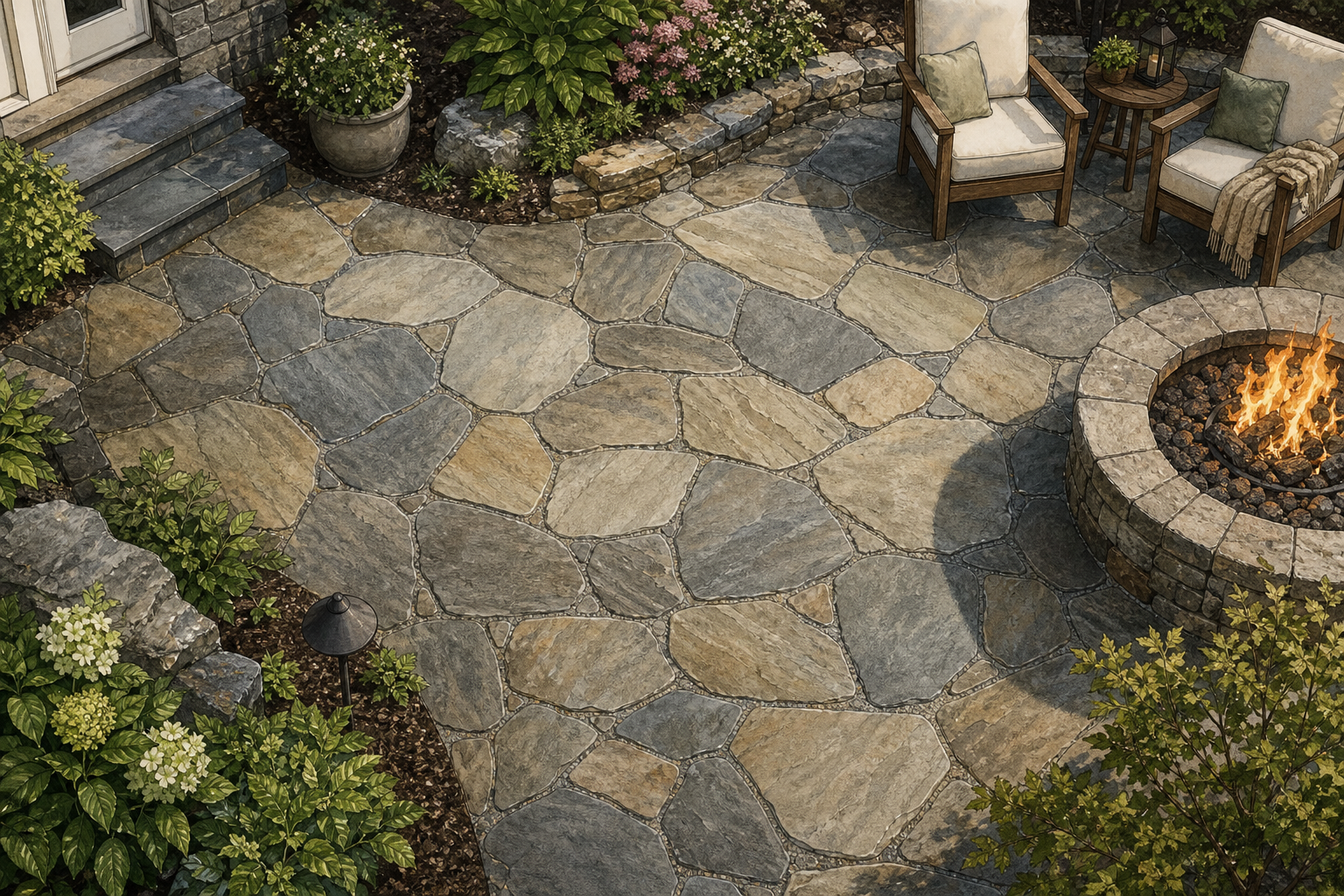
Get a clear picture of your flagstone patio project
Understand what your site and design choices mean for your budget before the first shovel goes in.
Three variables set the floor and ceiling of your budget
Before a contractor can give you a reliable number, three things need to be settled: how large the patio will be, which stone you choose, and how it will be installed. These are not independent decisions. A larger patio amplifies every other cost driver. A more complex stone type raises both the material line and the labor line. And the installation method, whether dry-laid over compacted gravel and sand or set in mortar on a concrete base, changes the project's scope entirely. Thinking through your patio design before you price it helps you avoid the common trap of budgeting for one version of a project and building another.
Stone species and cut quality pull material costs in opposite directions
Flagstone is not one material. Sandstone, limestone, bluestone, quartzite, and slate each carry a different price per square foot for the raw material, and the spread between the least and most expensive species is meaningful. Beyond species, the cut matters. Irregular, natural-cleft pieces cost less per ton than precision-cut slabs, but they require more labor to fit, so the savings on material can disappear in the labor column. Uniform cut stone goes down faster, but it reads differently underfoot and visually. The choice is as much aesthetic as financial.
Dry-laid versus mortar-set changes more than just the price
Dry-laid flagstone sits on a compacted gravel and sand base, with joints filled by polymeric sand. Mortar-set or concrete-set flagstone is adhered to a poured concrete slab. The installed cost difference between these two methods is substantial, because concrete-set work adds both the slab pour and the skilled masonry labor to set each piece precisely. Dry-laid installations are more forgiving of minor frost movement, which matters in Wisconsin's freeze-thaw climate, while mortar-set work offers a tighter, more formal finish but can crack if the base shifts. The right method depends on your soil, drainage, and how the patio will be used, not just on budget.
Site conditions in Wisconsin add layers that flat-lot estimates ignore
A patio quote built on national averages assumes a flat, accessible, well-drained site. Many properties in Washington, Waukesha, and Ozaukee Counties do not fit that description. Steep grades require grading or retaining work before a patio can even be laid, which is its own cost category. Restricted access, such as a narrow side yard or a lakefront lot with no road-side staging area, adds delivery and labor complexity. Poor drainage demands a subsurface system beneath the patio or the stone will heave and settle within a few seasons. Retaining walls are often part of the same project, and their cost interacts directly with the patio scope.
Longevity and maintenance factor into the real cost over time
Flagstone patios are durable. A well-installed and properly sealed surface holds up for well over a decade, and the stone itself does not fade or hollow the way some manufactured materials do. That durability is not automatic: the base preparation is where longevity is won or lost, not in the stone choice. A patio installed on an inadequately compacted base will shift and crack regardless of how beautiful the stone is. Sealing extends the life of the surface and reduces staining. When you compare flagstone to alternatives like concrete pavers or stamped concrete, factor in maintenance frequency and the cost of repairs, not just the day-one installation figure. See how flagstone compares to pavers on performance and longevity for a fuller picture.
What drives flagstone patio cost
Each of these factors can move your total up or down independently of the others.
- Patio size
- Larger square footage multiplies every other cost driver, raising both material and labor totals proportionally.Size is the baseline multiplier before any other variable is applied.
- Stone species
- Different flagstone types (sandstone, limestone, bluestone, quartzite, slate) carry meaningfully different material costs per square foot.Species choice affects material cost independently of cut style or installation method.
- Cut style
- Irregular natural-cleft pieces cost less as raw material but require more fitting labor; precision-cut slabs install faster but cost more upfront.Material savings on irregular stone can be offset by higher labor.
- Installation method
- Dry-laid over compacted gravel and sand is less labor-intensive than mortar-set on a concrete slab, which adds both the slab pour and skilled masonry work.Method choice is often the single largest variable in the total cost.
- Base preparation and drainage
- Poor soil, inadequate drainage, or a sloped site requires additional excavation, grading, and subsurface drainage work before any stone is laid.Skipping this raises long-term repair costs more than it saves upfront.
- Site access
- Restricted access (narrow side yards, lakefront lots, steep grades) raises delivery and staging complexity, adding to labor time and cost.Particularly relevant on lakefront and sloped properties.
- Scope of surrounding elements
- Adding fire features, outdoor kitchens, lighting, or retaining walls to the same project changes the total scope and can affect how patio costs are estimated.Coordinated design often costs less than phased additions to finished work.
The installation method alone can shift a flagstone patio from a modest investment to a significant one, even when every other variable stays the same.
How to think through your flagstone patio budget
- 1
Settle on size before anything else
Square footage is the multiplier that every other cost driver runs through. A larger patio does not just cost more in total; it amplifies the per-square-foot differences between stone types and installation methods. Sketch out how you actually want to use the space, then size from there rather than starting with a budget and working backward. See backyard patio design ideas for help thinking through layout before you commit to dimensions.
- 2
Choose your stone species and cut style
Each stone species carries a different material cost, and the cut style (irregular natural cleft versus precision-cut slab) affects both the material price and the labor required to install it. Irregular pieces take longer to fit, which adds to the labor line even when the raw stone costs less. Decide which look you want, then understand how that choice ripples into the total.
- 3
Decide on the installation method
Dry-laid over a compacted base and mortar-set on concrete are the two primary methods, and they represent meaningfully different scopes of work. Dry-laid is better suited to Wisconsin's freeze-thaw cycles because it can flex slightly without cracking. Mortar-set delivers a tighter finish but requires a concrete slab beneath it and skilled masonry labor throughout. The method you choose should reflect your soil conditions, drainage situation, and intended use, not just aesthetics.
- 4
Assess your site conditions honestly
Slope, drainage, and access all affect what it takes to prepare the site before any stone is laid. A sloped yard may need grading or a retaining wall as part of the same project. Poor drainage requires a subsurface solution that adds both materials and labor. Restricted access raises delivery and staging costs. Get a site assessment before you treat any estimate as final.
- 5
Think about what else will share the space
A flagstone patio rarely exists in isolation. Fire features, outdoor kitchens, landscape lighting, and seat walls are often planned alongside the patio, and designing them as a coordinated system from the start avoids costly retrofits later. Each addition has its own cost drivers, but they interact with the patio scope in ways that a phased or piecemeal approach tends to obscure.
- 6
Get quotes that reflect your actual site
National cost ranges give you a starting orientation, but they cannot account for your specific stone choice, installation method, site conditions, or what else is being built at the same time. A quote built on a real site visit will be more reliable than one built on square footage alone. Ask contractors to break out material, labor, and site preparation separately so you can see where the budget is going.
Benefits
Stone type shapes material cost significantly
Different flagstone species, from sandstone to quartzite to bluestone, carry meaningfully different price points per square foot. Choosing your stone species is one of the most direct levers you have on the material budget.
Installation method is the biggest single variable
Dry-laid and mortar-set installations represent different scopes of work entirely. The method you choose affects not just the price but the performance of the patio in Wisconsin's freeze-thaw climate.
Base preparation determines long-term durability
A flagstone patio's lifespan depends more on what is under the stone than on the stone itself. A properly compacted, well-drained base is where longevity is built, and cutting corners there is the most common source of costly repairs.
Site conditions add costs that estimates often omit
Slope, drainage problems, and restricted access all require work before stone is laid. These site preparation costs are real budget items that national per-square-foot ranges do not capture.
Coordinated design avoids expensive retrofits
Planning a patio alongside fire features, lighting, and an outdoor kitchen from the start is less expensive than adding elements later. Retrofitting finished stone to run conduit or gas lines adds significant labor that a coordinated design avoids.
What flagstone patio costs look like in practice
A sloped suburban backyard with drainage issues
A homeowner on a sloped lot in Waukesha County wants a flagstone patio at the base of the yard. Before any stone is laid, the grade needs to be addressed and a drainage solution installed beneath the patio to prevent heaving. A retaining wall may be needed to create a level pad. These site preparation costs are real and significant, and they do not show up in any per-square-foot stone estimate. The patio cost and the site preparation cost need to be budgeted together, not separately.
A lakefront property with restricted access
On a lakefront lot, material delivery and equipment staging are constrained by the site's layout and shoreline setback requirements. Stone and base materials may need to be moved by hand or with smaller equipment over longer distances. Restricted access adds labor time that shows up directly in the installation quote. A homeowner planning a patio alongside lake access stairs or a shoreline project should expect these costs to interact, since contractors are already mobilized on site.
A patio designed around a fire feature and outdoor kitchen
When a flagstone patio is designed to incorporate a fire feature and an outdoor kitchen, the layout has to accommodate gas lines, electrical conduit for lighting, and the structural requirements of the kitchen structure. Designing these elements together from the start avoids cutting into finished stone later. The complexity of a multi-element patio raises both the design and installation costs, but it also produces a more coherent result than adding features one season at a time. See fire pit paver ideas for how these spaces come together.
A DIY project on a flat, accessible lot
A homeowner with a flat, well-drained backyard and basic tool access might consider a dry-laid flagstone installation as a DIY project. Material costs for stone, gravel base, and polymeric sand are real, and the labor savings come with tradeoffs: fitting irregular stone correctly takes time and skill, and an improperly compacted base will cause the surface to shift within a few seasons. DIY is most viable on small, simple, flat sites where the consequences of a base error are limited and repair is straightforward.
How much does a flagstone patio cost? Common questions answered
Ready to plan your flagstone patio with confidence
A flagstone patio is a significant investment, and the variables that shape the final number are specific to your site, your stone choice, and how the space will be used. If you are planning a patio in Washington, Waukesha, or Ozaukee County, especially on a sloped, lakefront, or otherwise complex site, a conversation with a contractor who knows those conditions is the most useful next step.
Request a site consultation