

How Much Does Fire Pit Installation Cost?
Fire pit installation cost: what actually shapes your budget
Fuel type, materials, site conditions, and gas line work all push the number in different directions. Here is how to think through each one.
Plan your fire feature with a specialist
Talk through your fire feature plans with a landscape specialist who knows how to integrate them into a complete outdoor space.
Fuel type is the first fork in the road
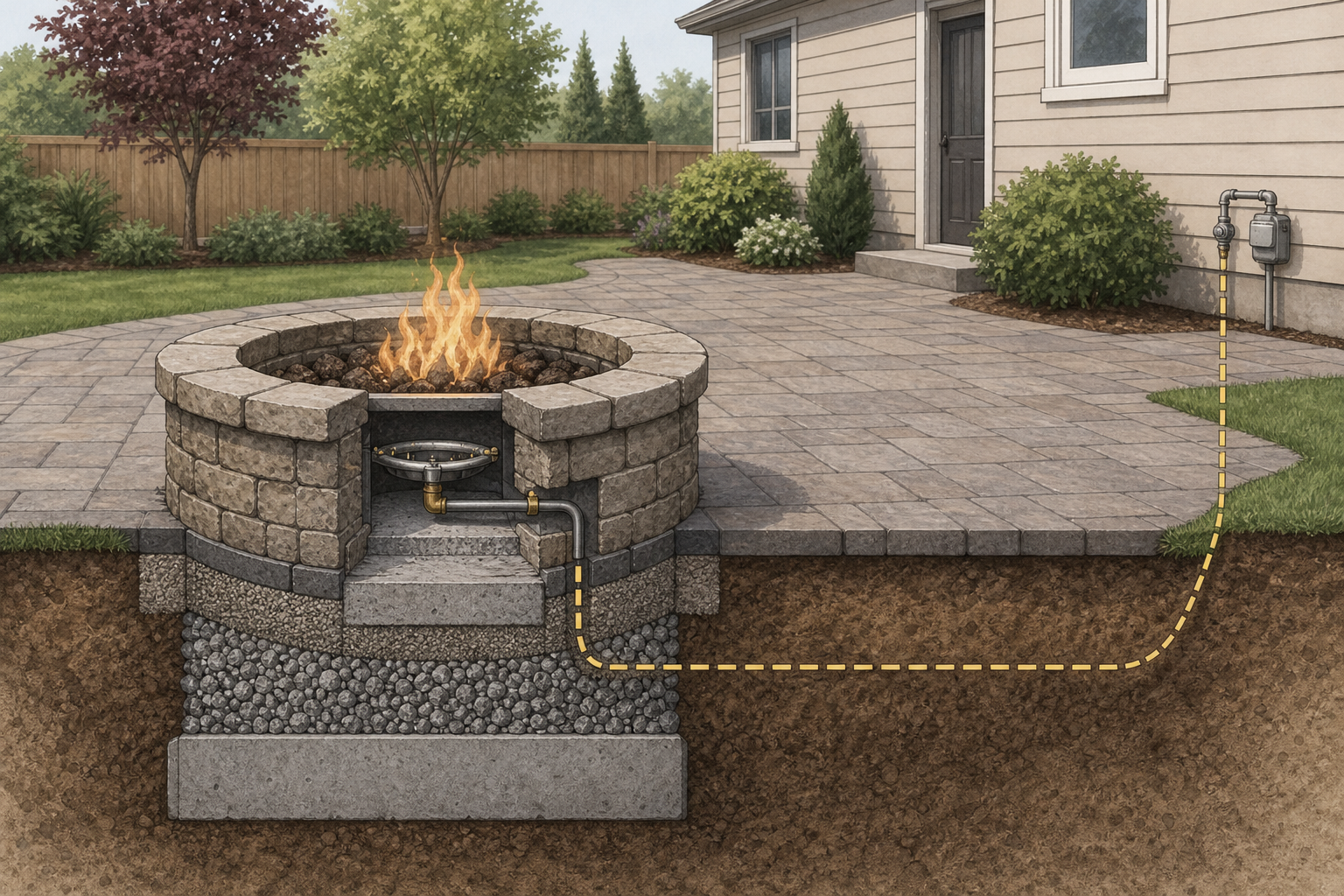
The single biggest decision shaping your fire pit budget is how it burns. Wood-burning pits are the most straightforward to install: no utility connection is required, which keeps the scope of work contained. Propane sits in the middle, requiring a tank hookup but no trenching to a gas line. Natural gas fire pits carry the highest installation complexity because they need a dedicated underground gas line run from your home's meter to the pit location. That line adds meaningful labor and material cost on top of the pit itself, and the longer the run, the more it adds. Choosing fuel type is not just a lifestyle preference; it is a structural decision that shapes everything downstream.
Materials determine how long it lasts and what it costs
At one end of the spectrum, a prefab steel ring or simple concrete block surround is relatively inexpensive to purchase and install. At the other end, a custom-built natural stone or brick fire pit with integrated seating walls involves skilled masonry labor, heavier materials, and considerably more design work. Manufactured stone generally costs less than natural flagstone or granite while still delivering a finished look. The material choice also affects longevity: a well-built masonry pit is a permanent landscape feature, while steel rings and prefab units are more replaceable. For a coordinated outdoor living space, the pit's material should visually connect to the surrounding patio surface and any seat walls, which can influence which material makes the most sense.
Labor is a larger share of the total than most people expect
Labor consistently represents a substantial portion of total installation cost, often around half of what you pay. That share rises when the project involves gas line work, because a licensed plumber is required for the connection, adding a separate trade to the job. Site conditions matter too: a level, open backyard with easy access is faster to work in than a sloped lot, a restricted lakefront, or a yard where equipment cannot reach the installation area without extra effort. If your property already presents grade challenges or drainage demands, those conditions will affect labor time even for a relatively simple fire feature.
Gas line installation adds its own cost layer
If you choose natural gas, the line itself becomes a significant line item. Cost scales directly with distance from the meter: a pit close to the house requires far less trenching and pipe than one positioned at the far end of a large lot or down near a lakefront. The work must be done by a licensed plumber or gas contractor, and in most jurisdictions it requires a permit and inspection. It is worth thinking about the pit's location not just aesthetically but practically, because moving the planned location even a modest distance can meaningfully change what the gas connection adds to your total.
Permits, site prep, and surrounding features round out the budget
Most municipalities require a permit for permanent fire pit installation, and some have restrictions on wood-burning features in certain zones. Permit costs vary by location and add to the overall project total. Beyond the pit itself, the surrounding environment shapes cost significantly. A well-designed patio and hardscape gathering space around a fire feature, including pavers, seat walls, or an outdoor kitchen nearby, represents a larger coordinated project. Site prep, including grading, drainage provisions, and base preparation, also adds to scope. Treating the fire pit as part of a complete outdoor system rather than a standalone installation typically produces better results and avoids costly rework later.
What drives fire pit installation cost
Each of these factors can move your total independently, and several interact with each other.
- Fuel type
- Wood-burning pits require no utility connection. Propane adds a tank hookup. Natural gas requires a dedicated underground line, licensed plumber, and permits, making it the highest-complexity option.Fuel type is the first decision that shapes everything else.
- Materials and finish
- Prefab steel or concrete block is the most affordable starting point. Custom natural stone or brick masonry with seating walls is at the high end. Manufactured stone sits in between.Material choice also affects longevity and how well the pit integrates with surrounding hardscape.
- Gas line distance
- The longer the run from the meter to the pit, the more trenching, pipe, and labor the connection requires. This factor alone can be a major cost driver for pits positioned far from the house.Pit placement relative to the meter is one of the most controllable cost variables.
- Labor and trade requirements
- Labor typically represents a large share of total cost. Gas work requires a licensed plumber. Masonry work requires skilled craftspeople. More complex installs involve multiple trades.Labor share rises with site difficulty and the number of trades involved.
- Site conditions
- Sloped lots, poor equipment access, and drainage issues all add labor time before installation even begins. A level, open site is the fastest and least costly to work in.Lakefront and sloped properties often face multiple compounding site challenges.
- Permits and inspections
- Permanent fire pits and gas connections typically require permits and inspections, which add to total cost and can affect project timeline.Requirements vary by municipality; some areas restrict wood-burning features.
- Surrounding hardscape and features
- A fire pit installed as part of a patio, seating wall, or outdoor kitchen project shares base prep and trade mobilization costs. A standalone pit added later to an existing space often costs more in aggregate.Coordinated planning consistently produces better value than phased additions.
A fire pit positioned far from the gas meter can cost significantly more to connect than the pit structure itself, making location one of the most consequential early decisions.
How to think through your fire pit project
- 1
Decide on fuel type first
Wood, propane, and natural gas each carry a different installation profile. Wood-burning requires no utility work. Propane needs a tank and connection. Natural gas requires a dedicated line, which adds licensed trade work, trenching, and permitting. Settling this question early shapes every other decision.
- 2
Choose your materials and scale
A simple prefab ring and a custom natural stone pit with integrated seating walls are very different projects in scope, labor, and material cost. Think about how the pit connects visually to the rest of your backyard patio design. A pit that matches the surrounding hardscape in material and style will look intentional rather than added-on.
- 3
Assess your site conditions
Slope, soil type, drainage, and equipment access all affect how much preparation the site needs before installation begins. A sloped or restricted site takes more labor than a flat, open one. If your yard already has grade issues, factor in whether any grading or drainage work needs to happen alongside the fire pit project.
- 4
Plan the gas line route carefully
If you are going with natural gas, map the distance from your meter to the intended pit location before committing to a spot. The longer the run, the more the line adds to your total. Positioning the pit closer to the house is one of the most practical ways to control this cost factor without compromising the design.
- 5
Understand permit requirements in your area
Permanent fire pits and gas line connections typically require permits. Some municipalities restrict wood-burning features. Confirm local requirements before finalizing the design so that permitting timelines and fees are built into your project plan from the start.
- 6
Consider the full surrounding space
The fire pit is often the focal point of a larger outdoor living space, including seating areas, paving, lighting, and sometimes a kitchen. Planning these elements together from the beginning avoids the cost and disruption of retrofitting features later, and produces a more cohesive result.
Benefits
Fuel type drives complexity
Natural gas requires licensed trade work and permitting that wood-burning and propane pits do not, making it the highest-complexity fuel choice even before the pit itself is factored in.
Labor is roughly half the total
Installation labor, including site prep, masonry work, and any gas connection, consistently accounts for a large share of total cost. Site conditions that slow the work, such as slopes or restricted access, directly increase that share.
Gas line distance is a controllable variable
The cost of running a gas line scales with distance from the meter. Positioning the pit closer to the house is one of the most straightforward ways to reduce this specific cost factor during the planning stage.
Coordinated planning reduces total spend
Installing a fire pit as part of a larger patio or outdoor living project means base prep, trenching, and trade coordination happen once. Adding features in separate phases typically costs more in aggregate than planning them together.
Real scenarios and what drives cost in each
Suburban homeowner adding a backyard gathering space
A homeowner on a level lot in Washington or Waukesha County wants a wood-burning pit surrounded by concrete pavers and seat walls. Because no gas line is involved and the site is accessible, the project scope stays relatively contained. The main cost drivers are the masonry materials and the surrounding hardscape design. Choosing coordinated materials for the pit, patio, and seat walls in a single project avoids multiple mobilizations and produces a more finished result.
Lakefront homeowner with a sloped lot and natural gas preference
A lakefront property owner wants a natural gas fire pit positioned near the water's edge, well away from the house. The gas line run is long, the terrain is sloped, and equipment access is limited. All three of those conditions add labor cost independently: the long line, the grade work, and the restricted access. This is the scenario where early planning and a realistic budget conversation matter most, because each factor compounds the others.
Homeowner integrating a fire feature into a full outdoor kitchen build
When a fire pit is part of a larger project that includes an outdoor kitchen, lighting, and a patio, the installation can be coordinated so that gas lines, electrical conduit, and base preparation are done in a single mobilization. Coordinating trades across the full project is more efficient than adding a fire pit to an existing space after the fact, where trenching and base work may disturb finished surfaces.
Homeowner on a sloped lot needing grading before installation
A backyard with significant grade change requires leveling or terracing before a fire pit can be safely and attractively installed. The grading work itself is a cost factor separate from the pit. If a retaining wall is already planned for the slope, incorporating the fire feature into that design phase is far more efficient than returning to the site later. Site prep and structural work done together reduce total project cost compared to sequential visits.
How much does fire pit installation cost? Common questions
Ready to plan your fire feature the right way
A fire pit is most successful when it is planned as part of the broader outdoor space around it, not added as an afterthought. If you are thinking through a fire feature for your backyard or lakefront property in Washington, Waukesha, or Ozaukee County, McGuire Landscape Company can help you work through the design and site factors before committing to a scope.
Start your project conversation